
In the rack
- A BGP-capable router, or a server running FRRouting or BIRD
- A half or full rack for the rest of your equipment
- A+B power to the router
Your ASN, your prefixes, two or more carriers
BGP colocation is colocation where you announce your own IP addresses from your own autonomous system number (ASN), over BGP sessions with two or more carriers, instead of using the provider’s addresses. You need an ASN, at least a /24 of IPv4 or a /48 of IPv6, a router and a cross-connect to each carrier. If you take full routes, your router holds about 1.09 million IPv4 prefixes (CIDR Report, November 2026).
Updated November 2026 · Bob Spiegel, Founder, QuoteColo

“Tell me what you’re deploying; I’ll come back with real options from a network built over 20 years.”
— Bob Spiegel, Founder, QuoteColo
In this guide
From our desk, November 2026
From ARIN’s 2026 fee schedule and policy manual, IPv4.Global’s public sales record, the CIDR Report and NIST’s RPKI Monitor, read 17 November 2026.
With standard colocation the provider gives you addresses from its own space and routes them for you. With BGP colocation you bring your own ASN and IP space, set up BGP sessions with your upstreams and decide what you announce to whom. The facility provides the rack, the power and the cross-connects.
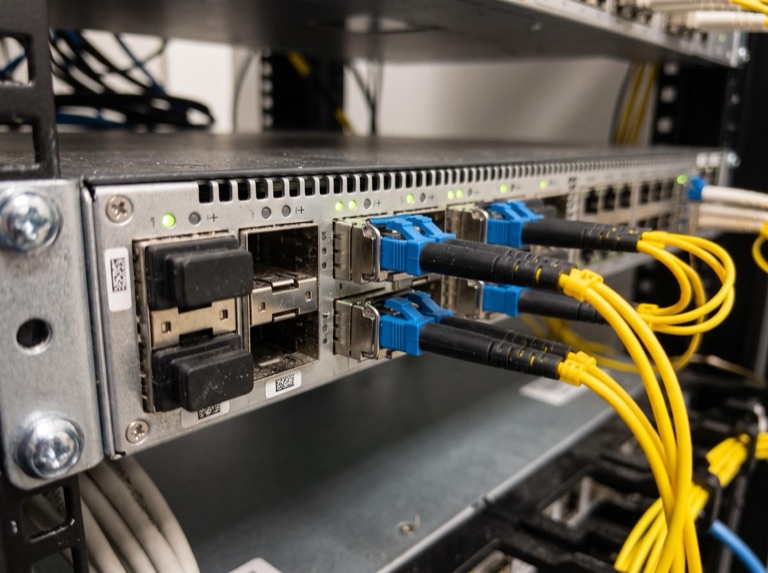
Before you run BGP, decide what address space you’ll announce. Real multi-homing across two independent carriers usually needs your own space, and a /24 of IPv4 or a /48 of IPv6 is the smallest block most networks accept.
Completed sales of ARIN /24 blocks in IPv4.Global’s public sales record, read 17 November 2026. Multiply by 256 for the price of the block.
Want these numbers for your own deployment? and we’ll reply with the providers that fit, with their prices.
Once you have an ASN, address space and a cross-connect to each upstream, three things decide how your routing behaves.
What you set
Your prefixes go out to each carrier; routes come back. Take a default route if you only need failover, or full routes, about 1.09 million IPv4 prefixes, if you want to choose paths per destination.
Watch for
Full routes need a router with the memory and forwarding table to hold them, with room to grow.
What you set
Register a route object in an internet routing registry and sign a Route Origin Authorization (ROA) for each prefix in ARIN’s RPKI, which is free once your space is under an ARIN agreement.
Watch for
A ROA that doesn’t match your announcement makes the route invalid, and Lumen, Arelion, NTT and Zayo drop invalid routes. 71.6% of IPv4 routes were valid in November 2026.
What you set
Local preference picks your outbound carrier; AS-path prepending and each carrier’s BGP communities shape how traffic comes in.
Watch for
Two ports on the same carrier aren’t multi-homing. You need two different networks.
Not every facility suits a BGP deployment. Check these before you sign.
BGP colocation costs more than standard colocation because of the network around the rack, not the rack. Here is one rack in Dallas with two upstream carriers.
Ranges, not a quote: built from the line items below.
There are three common ways to run two upstreams. The right one depends on whether you need failover only or traffic engineering too.
How it works
One carrier carries the traffic. The other has live sessions and your prefixes, made less preferred with local preference and prepending, and takes over if the first fails.
Best for
A first BGP deployment, SaaS high availability, a DR uplink.
How it works
Both carriers carry traffic. Outbound is split by your policy; inbound arrives on whichever path each sending network prefers.
Watch for
Uneven inbound traffic. Tuning it with prepending and communities is ongoing work.
How it works
Different prefixes go out through different carriers, so each service or customer tier arrives the way you choose, with the other carrier as backup.
Best for
ISPs and hosting companies with several products or customer tiers.
BGP works in any carrier-neutral facility, but the depth of carriers and exchanges in a metro decides how far you can take it. PeeringDB lists 240 active exchanges in the US and Canada; these are the largest in the main metros.
Networks with a port on the exchange. By peak traffic the order differs: Equinix Ashburn is the busiest US exchange (6.39 Tb/s in the 30 days to 17 November 2026), ahead of Equinix Chicago, SIX, Equinix Dallas and DE-CIX New York.
The same protocol, very different deployments.
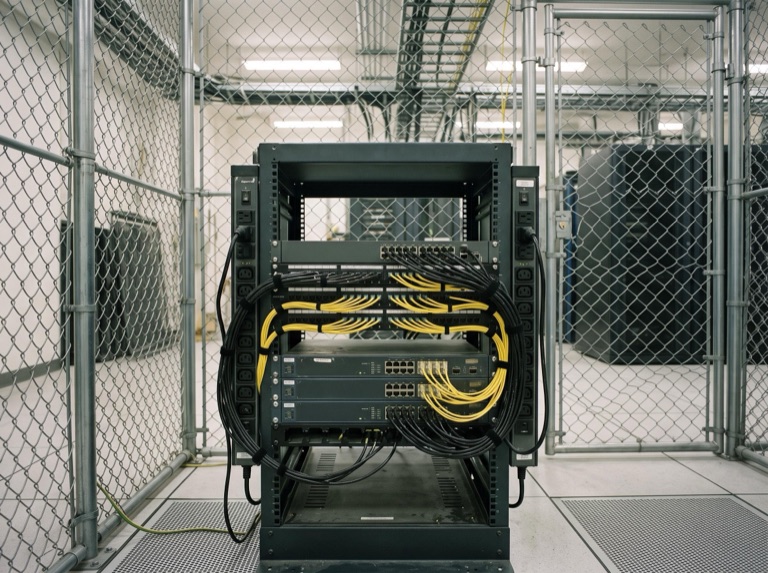
BGP colocation sounds bigger than it is. A first deployment needs this much, and no carrier hotel.
Most facilities will let you run BGP. Whether you get two independent upstreams at a price that works is a different question.
They say yes, then sell you a session on their own blended network. That’s BGP with one upstream: if their network has a problem, so do you.
The two carriers you want may not both be on-net. One arrives as an off-net circuit that takes months.
Transit, cross-connects and the exchange port are billed apart from the rack, often by different companies.
Send your requirements once.
We match them against prices and specs we already hold from 500+ providers.
You get the providers that fit, with prices, and call the ones you pick.
You never pay us. Providers cover it.
You send the specs. We find the options. You decide.

Tell us what you're deploying, where you want it, and when you need it. Send the specs you have; we'll help with the rest.
Estimates are fine. No perfect RFP needed.
We filter our network of 500+ providers down to a few that fit, then email you their names and estimated all-in pricing for your requirements.
 Provider names & matched optionsEstimated total, with inclusions & extrasAvailability & key terms

Like the options? Contact the providers directly. Need more detail? Call or email us. We're here to help, not push you.
 Go directly to the providers you like
 Ask us questions whenever you need
Your price is the same as going direct.
Review the options before deciding on a call.
5,000+ clients helped.

See how we helped teams secure colocation with the right power, pricing, and providers.
Prices, checklists and market notes from the same desk.
Clients helped since 2004
to Buyers
Worldwide providers
in 48 h
In standard colocation the provider gives you addresses from its own space and routes them from its own ASN. In BGP colocation you bring your own ASN and provider-independent addresses, run BGP sessions with your upstream carriers over cross-connects, and set your own routing policy. The facility supplies the rack, power and cross-connects; the routing is yours.
Yes, to announce your own prefixes to several carriers. From ARIN it costs $275 a year in 2026 ($288.75 in 2027) plus $50 once to set up your organization, the same for ISPs and end users, and any organization can get one on request. If a provider announces your space from its ASN instead, that’s a managed BGP service, not your own routing.
A /24 is a block of 256 IPv4 addresses, the smallest block most networks accept in BGP; for IPv6 it’s a /48. Your first ARIN /24 needs no usage justification. Most organizations buy one on the transfer market, about $25.62 per address or roughly $6,500 in late 2026, plus a $187.50 ARIN fee, or lease addresses at about $0.35–0.60 each a month.
RPKI lets you sign a Route Origin Authorization (ROA) saying which ASN may announce your prefixes. Large carriers including Lumen, Arelion, NTT and Zayo drop routes that are RPKI-invalid, and 71.6% of IPv4 routes were valid in November 2026. Create ROAs in ARIN’s RPKI, free once your space is under an ARIN agreement, before your first announcement.
With default timers, up to 90 seconds by the standard and on Juniper, or 180 seconds on Cisco, before the dead session is noticed and routes move. With BFD running alongside BGP, failures are detected in about 0.3–0.9 seconds. Run BFD with each upstream that supports it if failover time matters.
Yes. Anycast means announcing the same prefix from several metros. We match facilities in each market you need, ask whether their upstream carriers accept the anycast announcement without filtering it, and send the options by email within 48 hours once the requirements are clear. Tell us it’s for anycast in your requirements.
There’s no BGP-specific minimum: you sign the facility’s standard term, often 12 months or more, and each carrier’s minimum transit commit. As a guide, one 5 kW rack in Dallas with two cross-connects and two 1 Gbps transit commits comes to about $2,300–4,950 a month on our numbers, before the router and ARIN fees.
Not if it gives you real cross-connects to independent carriers: the BGP session runs between your router and the carrier, over fiber the facility only provides. A facility that routes you through its own network instead can limit what you announce, which is why we confirm direct carrier access before a facility goes on your shortlist.
No. You don’t pay us. Providers share their existing standard sales commission with QuoteColo, so there’s no added fee or markup on your provider quote.


