

Scenario 1
Search and AI answers
The same few national names every time. No current pricing, and nothing on who has capacity at your size this quarter.
Struggle to find colocation all-in quotes for your specs?
From a single 1U server to 500 kW. Standard, high-density, and private cage.
Your price is the same as going direct. We are not a typical broker.
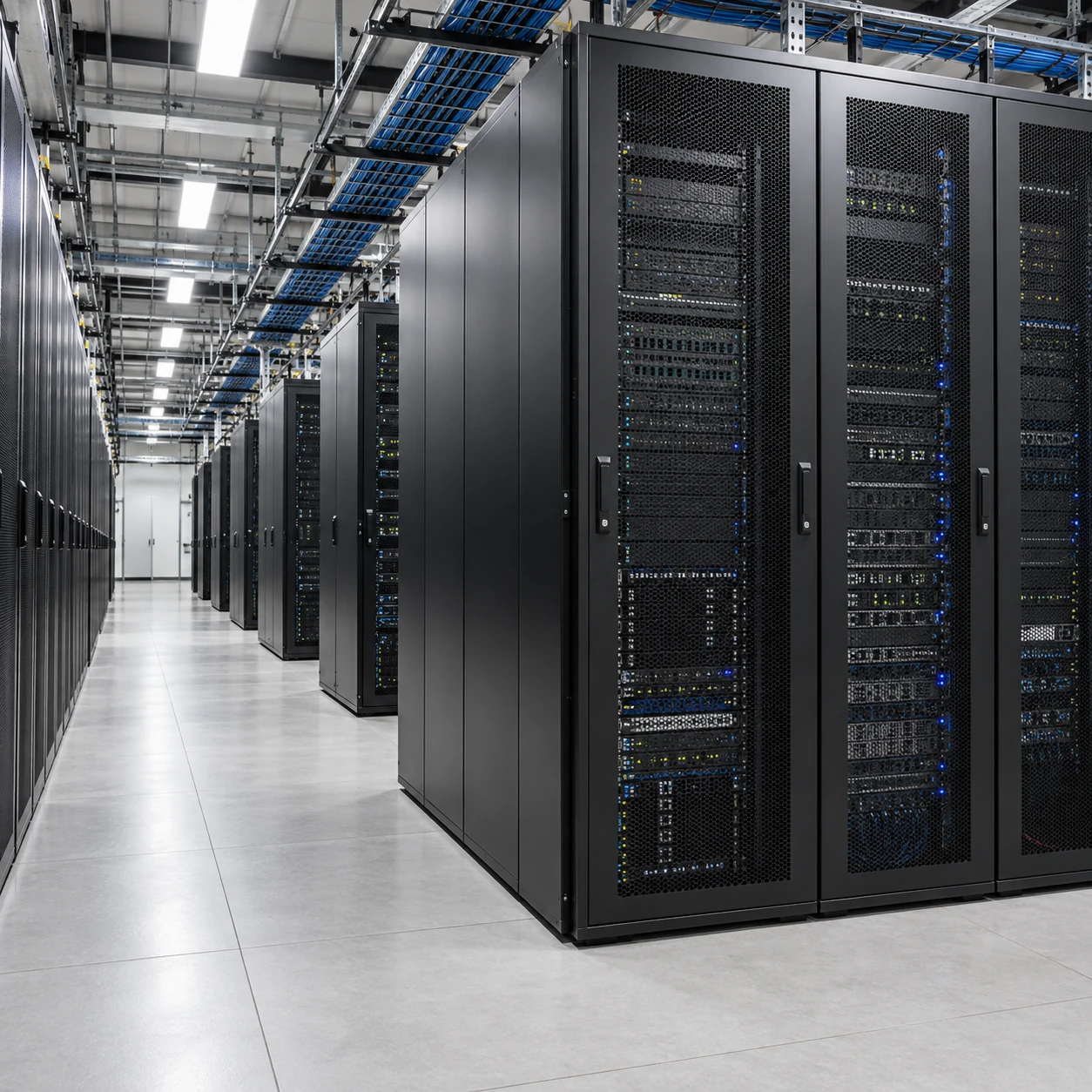
Hundreds of providers, national and regional. We know what they quoted last month, because we asked.
Clients helped since 2004
Worldwide providers
to Buyers
in 48 h
From 200 kW at $200–250/kW down to a single 1U at $79/month. As of October 2026.
| Market | 10U ≈0.5–1 kW |
Half cabinet ≈20U · 2–4 kW |
Full rack 42U · ≈5 kW |
High-density rack 42U · ≈10–12 kW |
|---|---|---|---|---|
| Ashburn (VA) | $120 – $220 | $900 – $1,300 | $1,500 – $2,500 | $2,200 – $4,800 |
| New York Metro | $150 – $250 | $1,000 – $1,500 | $1,600 – $3,000 | $2,500 – $5,000 |
| Silicon Valley (CA) | $140 – $230 | $900 – $1,400 | $1,600 – $2,800 | $2,300 – $4,800 |
| Los Angeles (CA) | $130 – $210 | $800 – $1,200 | $1,200 – $2,500 | $2,000 – $4,500 |
| Chicago (IL) | $120 – $200 | $800 – $1,200 | $1,100 – $2,300 | $1,800 – $4,000 |
| Dallas (TX) | $100 – $190 | $700 – $1,100 | $1,000 – $2,100 | $1,700 – $3,500 |
| Atlanta (GA) | $100 – $180 | $700 – $1,000 | $1,100 – $2,200 | $1,800 – $3,800 |
| Seattle (WA) | $100 – $170 | $600 – $900 | $1,000 – $2,000 | $1,800 – $3,500 |
| Phoenix (AZ) | $110 – $180 | $750 – $1,050 | $1,300 – $1,600 | $2,100 – $4,400 |
| Miami (FL) | $110 – $190 | $800 – $1,100 | $1,100 – $2,300 | $1,900 – $4,000 |
| Boston (MA) | $120 – $190 | $800 – $1,200 | $1,200 – $1,800 | $2,400 – $4,900 |
| New Jersey | $95 – $160 | $650 – $950 | $1,050 – $1,800 | $2,500 – $5,000 |
| Houston (TX) | $75 – $130 | $700 – $950 | $1,000 – $1,800 | $2,100 – $4,900 |
| Denver (CO) | $150 – $380 | $1,200 – $1,600 | $1,800 – $2,300 | $2,500 – $5,200 |
| Philadelphia (PA) | $260 – $520 | $1,600 – $1,850 | $1,600 – $1,950 | $2,600 – $5,400 |
| Portland (OR) | $300 – $500 | $1,200 – $1,450 | $1,500 – $1,800 | $2,500 – $5,200 |
| San Jose (CA) | $70 – $100 | $750 – $1,750 | $950 – $1,950 | $2,500 – $5,100 |
| Toronto (ON) | $150 – $300 | $1,300 – $1,500 | $2,000 – $2,450 | $3,000 – $5,500 |
| Montreal (QC) | $300 – $500 | $1,200 – $1,450 | $1,500 – $1,800 | $2,500 – $5,200 |
| Vancouver (BC) | $250 – $500 | $1,500 – $1,750 | $1,500 – $1,900 | $2,500 – $5,200 |
These ranges are a starting point. Regional providers may offer lower pricing for your requirements, including options that aren’t advertised online. Send us your specs and preferred locations — we’ll compare national and regional providers for your shortlist.
Find your band. Above 15 kW, facilities start qualifying you harder.
| Density | What it means | What to confirm |
|---|---|---|
| 10–12 kW/rack | High-ish density for modern CPU-dense servers | Whether the quoted figure is sustained or peak |
| 15–30 kW/rack | High-power territory. Many facilities start qualifying you harder here | Containment design and rack placement rules |
| 30–60 kW/rack | Cooling design decides the shortlist — containment, in-row, RDHx | Chilled-water capacity and cabinet compatibility |
| 60–100+ kW/rack | Liquid-ready or liquid-cooled: direct-to-chip, rear-door | Whether CDUs are installed or planned |
If a provider can’t support your density reliably, you get throttling, hot spots, surprise upgrade fees, or a forced migration later.
Traditional colocation works for many use cases — but if your deployment has unique power, hardware or scale requirements, explore the right category below.
Density decides the shortlist more than the market does. Cooling class, usable kW, A/B headroom.

H200, B200, GB200. Matched on what the hardware needs rather than on rack count.
Leased suite, powered land, or build-to-suit. Different timelines, different economics.
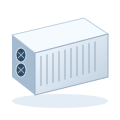
Miners, containers, and whole farms. A different market from colocation — quoted on power cost, not rack space.
Three of them cost you weeks or a fee.
Scenario 1
The same few national names every time. No current pricing, and nothing on who has capacity at your size this quarter.
Scenario 2
Fifteen forms, several sales queues, pricing weeks later in formats that don’t line up. Some quote per cabinet, some per kW.
Scenario 3
Someone you trust points you at the facility that worked for them. One data point, at their size, in their market.
Scenario 4
Referral networks are built around operators who pay to be in them, so regional facilities are underrepresented by design. Specs once, 2–4 comparable quotes back.
Comparable quotes, normalised to the same line items.
Some providers demand full qualification before they’ll talk; others start from technical specs. We know which is which.
No sales call until you’ve reviewed the options.
Turnaround time.







Step 1
Rack count or kW, market and a fallback, timeline, term. If you don’t know which size band you’re in, say what you’re deploying and we’ll work it out.
Step 2
Providers without capacity at your size, with minimums above your footprint, or who won’t put pricing in writing don’t reach your shortlist.
Step 3
Normalised to the same line items — space and power, bandwidth, cross-connects, remote hands, setup — so two quotes can actually be compared. No calls until you’ve reviewed them.
Here’s what an actual conversation looks like. Simple, direct and no sales pressure.

A rack quote can change significantly once you account for power, A/B redundancy, bandwidth, cross-connects and remote hands. What matters is the monthly cost of the configuration you actually need.
Your preferred location
An alternative market
, preferred location and a Plan B. We’ll compare estimated all-in monthly price ranges for both, with included services, extras and one-time charges shown separately.
Example monthly quote
Space + power subtotal
Before any separately billed network or service charges.
Check what your quote includes
The configuration and contract terms can change your monthly cost. Compare the same requirements across both locations.
| Factor | What it costs | Swing |
|---|---|---|
| Power model | Reserved kW vs metered kWh; A+B redundancy; 3-phase at $100–500/month; overages $150–1,500. | +15–45% |
| Bandwidth model | 95th percentile vs flat commit; blended vs carrier-direct; unmetered at +10–40% over a right-sized commit. | +5–35% |
| Cross-connects | $150–400/month each, plus $250–1,500 one-time. Two to four is typical. | +5–25% |
| Remote hands | $150–250/hour past the allowance, 30–60 min minimums, 1.25–2× after hours. | 0–20% |
| High-density cooling | Containment premium; $300–2,000/month for dense or hot-exhaust racks. | +5–25% |
| Contract term | Month-to-month or 6–12 months against a 36-month base; 3–5% annual escalator. | +10–30% |
| Compliance | SOC 2 / ISO / audit support, where required. | +2–10% |
Illustrative ranges from the planning table. Actual impact depends on the provider and configuration; these ranges overlap and are not additive.
Our service costs you the same for a single server or fifty racks: nothing. Providers pay our commission the way they’d pay an in-house salesperson, so there’s no deal size we turn away.
Some national operators won’t quote less than a full cabinet. Others require long forms and weeks of sales calls before sharing an all-in price. We know regional providers that take smaller deployments, including operators you won’t find through search.
1 server
$0QuoteColo fee
50 racks
$0QuoteColo fee

We’re not a data center trying to sell you on our facility. We’re a broker with 500+ partner data centers, so the only job is finding yours.
Specs go to providers with capacity at your footprint, not to everyone in the database.
Technical specs are enough to begin.
Regional providers matched to your size and location.
Normalised to the same line items.