

Skip to content

A buyer’s guide in seven steps

How to Find HIPAA-Compliant Colocation Providers: A Buyer's Guide (2026)

To find a HIPAA-compliant colocation provider, settle your requirements first, then ask every candidate for the same five documents before any sales call: a BAA template, written §164.310 physical safeguards, its latest risk analysis, a SOC 2 Type II report and its audit-support process. Evaluate three or four providers in parallel and a structured search takes about 4–10 weeks to a signed contract.

Updated November 2026 · Bob Spiegel, Founder, QuoteColo

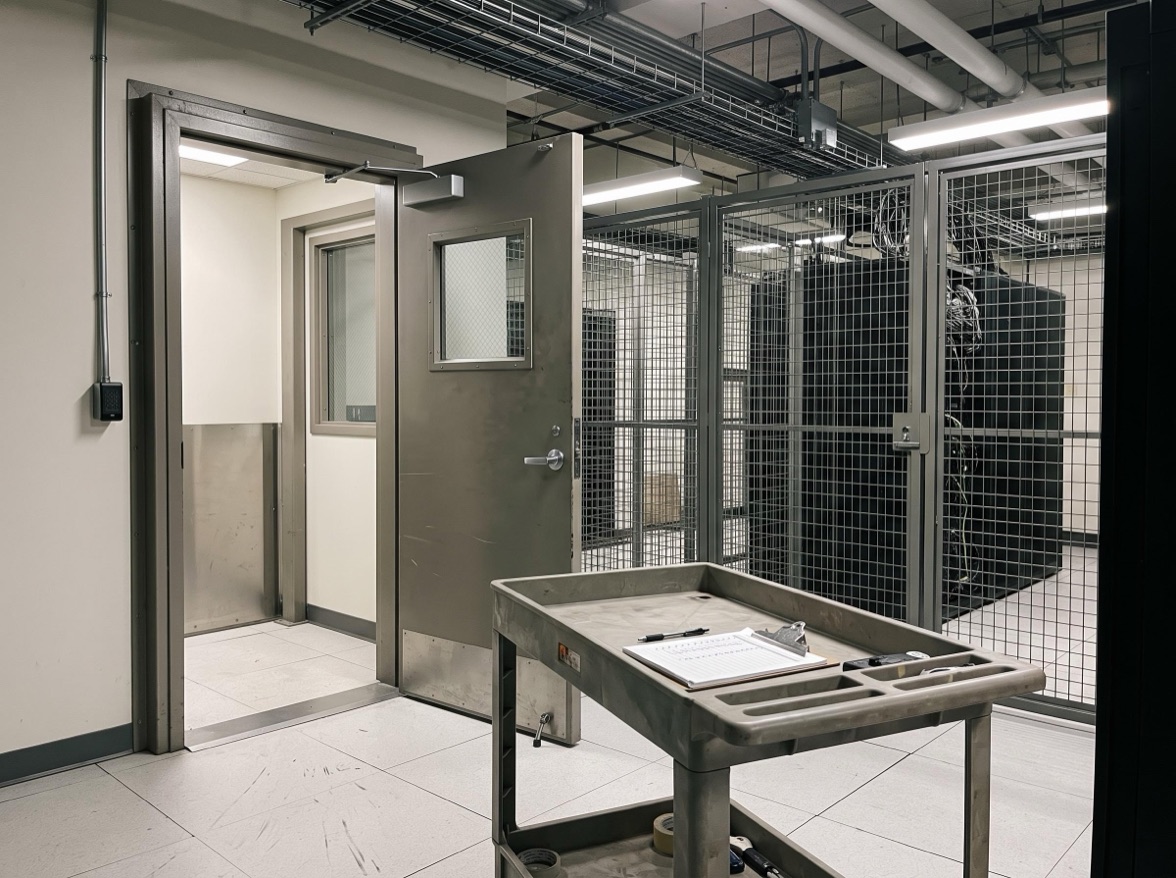
A data center corridor with a mantrap door standing open and a cart with a printed checklist in the foreground
Bob Spiegel

“Tell me what you’re deploying; I’ll come back with real options from a network built over 20 years.”

— Bob Spiegel, Founder, QuoteColo

From our desk, November 2026

5
documents to request before any discovery call
3–4
providers to evaluate in parallel: fewer limits leverage, more adds overhead
4–10 weeks
from first request to signed contract in a structured search
60 days
the outer limit for a business associate to report a breach to you (§164.410)

Timelines from our experience with healthcare searches; the 60-day limit from 45 CFR §164.410. Not legal advice.

Who this guide is for

A practical procurement guide for IT managers, compliance leads and infrastructure teams who already know they need HIPAA coverage at the physical layer. For what HIPAA requires of a facility (the BAA, §164.310, shared responsibility), see HIPAA colocation providers first.

If you are…Start with
Still working out what HIPAA asks of a facilityHIPAA colocation providers: the BAA, §164.310 and who is responsible for what
Ready to choose a facilityThis guide: requirements, documents, site visit, red flags, comparison and timeline
Also bound by SOC 2 or PCI DSSSOC 2 colocation and PCI DSS colocation

A structured search evaluating three or four providers in parallel takes about 4–10 weeks from first request to signed contract; most of the variation is how fast providers send documents and how long legal review of the BAA takes.

Step 1: Define your requirements before you contact anyone

The fastest way to lose time is to call providers before you know what you need. Settle these first and each provider gets one structured conversation instead of several.

Infrastructure

  • Racks and kW per rack, peak and sustained
  • Cage or cabinet; ask your auditor if unsure
  • A+B power to the cabinet for ePHI systems (see A+B power)
  • The uptime your own contracts promise
  • Bandwidth model, cross-connects, cloud on-ramps
  • Primary market and acceptable Plan B markets
  • 12- or 36-month term

Compliance

  • A BAA from the facility: almost always yes if ePHI is on servers there
  • SOC 2 Type II alongside HIPAA, and which criteria
  • ISO 27001 or HITRUST, if customers or regulators ask
  • Data types: standard ePHI, or 42 CFR Part 2 records, or trial data
  • Your audit cycle and how fast you’ll need logs

Want these numbers for your own deployment? and we’ll reply with the providers that fit, with their prices.

Step 2: Build your initial longlist without discovery calls

Start with a documentation request, not a call. Any facility worth evaluating can answer one before a meeting.

Where a useful longlist comes from

SourceWhat you getWatch for
Large national operatorsMature compliance programs and standard documentsLarger minimums and longer sales cycles; a useful price ceiling
Mid-tier and regional operatorsDocumentation plus room for smaller footprintsRarely on the first page of search; documents vary most here
Peer referralsFacilities that already passed someone’s HIPAA auditAsk what was audited, and when
AvoidFacilities whose only HIPAA evidence is a web page“Committed to HIPAA compliance” with nothing attached

The documentation request: send it before any call

#Ask forWhat it tells you
1Confirmation that they sign BAAs, and their BAA templateWhether they’ve done this before, and what your legal team will negotiate
2Their written §164.310 physical safeguard policiesWhether the controls exist on paper, not just on the tour
3Date and scope of their latest risk analysis, and who did itHow current their own assessment is, and whether it covers this site
4Their latest SOC 2 Type II report, its period and criteriaWhether controls were tested over time, and recently
5Their audit-support process: the contact and the turnaround for logsHow fast you’ll get evidence when your auditor asks

Large operators may route the request through sales and ask for an NDA before sharing the SOC 2 report; that’s normal. No answer on any of the five is the red flag.

Step 3: How to read the documents providers send

Most HIPAA colocation problems don’t come from facilities lying. They come from buyers accepting documents they haven’t read.

  1. SOC 2 Type II report

    Four things to check

    Check

    Type II, not Type I; a period that ended recently; Security in scope, and Availability for ePHI systems; an unqualified opinion, with any exceptions read.

  2. BAA template

    Clauses to flag

    Check

    A breach-reporting deadline (the rule’s outer limit is 60 days; negotiate shorter), subcontractor BAAs, a return-or-destroy clause that fits hardware you own, and signature before any ePHI arrives.

    Watch for

    Templates copied from cloud or SaaS BAAs that don’t fit colocation.

  3. Risk analysis summary

    What you need from it

    Check

    A recent date, scope covering this facility, an independent firm, and remediation of anything significant.

    Watch for

    An internal review presented as a third-party assessment, or one done at a different site.

Step 4: The site visit — what to check beyond the tour

Every tour shows mantraps, readers, cameras and locked cages. The questions that separate documented facilities from well-marketed ones come after.

TopicWhat to ask
Access logsIf my auditor needs logs for my cabinet for a date range, who do I ask, how fast, and in what format?
Removing accessHow quickly is a former employee’s access removed after I ask?
Visitors and contractorsWhat does the visitor log record, how long is it kept, and are contractors logged separately?
Camera footageHow long is footage kept, and how fast can you retrieve a specific date?
Security incidentsAny physical security incidents in the last 12 months, and how were they documented?
Devices and mediaWhat’s the process to remove a drive, and the chain of custody if you dispose of one?
Staff at customer equipmentWhat may your staff do at or near my equipment, and is it written down?
Maintenance recordsAre repairs to locks, readers and doors logged, and can I see the log?
BAA turnaroundHow long does BAA review take, and who handles changes?
Past auditsHave you supported a customer through a HIPAA audit or an OCR investigation? What did you provide?

Facilities that have been through real audits answer these specifically. General answers tell you something too.

Step 5: Red flags to watch for before you sign

Most HIPAA colocation problems surface during or after contracting. These patterns cause most of them.

Red flagWhat it usually means
Documents appear only after you askA §164.310 policy or BAA template written to win your deal has no track record.
A SOC 2 Type I offered as if it were Type IIControls were designed on one date, not tested over time.
“HIPAA-ready,” “HIPAA-capable,” “HIPAA-friendly”The documentation isn’t done.
Scope that doesn’t match your siteA report or assessment covering headquarters or a different data center.
The BAA arrives with the contractIt gets reviewed under time pressure next to the MSA and SLA.
“We support audits” with no processNo named contact, no turnaround, no example of a past audit.
A price far below the marketAsk which compliance costs the facility isn’t carrying.

Step 6: Running a structured comparison across providers

Prices don’t line up because providers quote different components, and compliance documents come in different formats. Normalize both.

Normalize the price comparison

Line itemWhat to get from every provider
RackThe monthly price at your actual kW, not a default
A+B powerIncluded, or the extra per circuit
Cross-connectsMonthly and install fee per circuit
BandwidthCommit, burst rate and what happens above it
Remote handsBusiness-hours and after-hours rates, minimum increment
SetupOne-time fees, and whether longer terms waive them
Term12-, 24- and 36-month prices
CageQuarter, half and full cage prices where relevant

Score compliance the same way for everyone

CriterionStrongAcceptableInsufficient
BAAStandard template, quick signatureWill sign after negotiationNo template; “we can look into it”
SOC 2 Type IIRecent period, clean opinion, Security and AvailabilityRecent period, minor exceptionsType I only, or an old period
Risk analysisRecent, independent, remediation documentedOlder, minor gapsInternal only, or none
Physical safeguard documentsWritten policies, logs on request with a stated turnaroundWritten policies, informal log process“We have controls,” nothing written
Audit supportNamed contact, a past audit described, a stated turnaroundA contact, general willingness“Happy to help” with no process

A provider strong on all five and 15% dearer is a different risk from one that is insufficient on two. That’s not only a price decision.

Step 7: Realistic procurement timeline

Evaluating three or four providers in parallel. Running them one after another typically doubles it.

A structured search, week by week

  • Requirements and documentation requestsInternal alignment on cage, compliance and term
    Week 1
  • Review documents; shortlist 3–4Slow responses and NDAs for SOC 2 reports
    Week 2
  • Site visits and pricingSchedules; providers that want several calls
    Weeks 3–4
  • BAA review, final pricing, referencesLegal review time on both sides
    Weeks 4–5
  • Contract and install schedulingPower lead times in tight markets
    Week 6+
  • DeploymentLonger for liquid-cooled or high-density setups
    2–6 weeks after signing

Planning ranges from our experience. What shortens it most: documents before calls, providers in parallel, and the BAA to legal before the final choice.

Where QuoteColo fits in this process

We’re a referral service, not a compliance consultant. We don’t audit facilities or certify their HIPAA posture; we shorten Steps 1–4.

  1. What we do

    Shorten Steps 1–4

    Before your shortlist

    We ask each provider to confirm that it signs BAAs, has written §164.310 policies and a recent risk analysis, and which SOC 2 report it holds.

    For you

    Your legal team reviews two or three BAA templates instead of six, and you visit two or three sites instead of five.

  2. What we don’t do

    Your diligence

    Still yours

    Reading the BAA and risk analysis, the site visit and the final decision. We don’t audit facilities or certify HIPAA status.

    Cost to you

    None. You don’t pay us. Providers share their existing standard sales commission with QuoteColo, so there’s no added fee or markup on your provider quote.

Where HIPAA colocation searches lose weeks

Most of the time goes before anyone reads a document.

THE DIY WAY

You start with discovery calls

Every provider books a call, and every call shows you haven’t settled cage vs cabinet, kW or SOC 2 scope yet.

THE DIY WAY

You evaluate one provider at a time

Running providers in sequence typically doubles the timeline.

THE DIY WAY

The BAA arrives with the contract

Your legal team reviews it under time pressure alongside the MSA and SLA, and it gets less scrutiny than it needs.

How it works

You send the specs. We find the options. You decide.

STEP 1

Send your requirements.

Tell us what you're deploying, where you want it, and when you need it. Send the specs you have; we'll help with the rest.

HardwareRacks & kWLocationStart date

Estimates are fine. No perfect RFP needed.

STEP 3

Take the next step. On your terms.

Like the options? Contact the providers directly. Need more detail? Call or email us. We're here to help, not push you.

  • Go directly to the providers you like
  • Ask us questions whenever you need

Get 2–4 qualified options in 48 hours

Free for buyers

Your price is the same as going direct.

Comparable prices by email

Review the options before deciding on a call.

Trusted service since 2004

5,000+ clients helped.

By clicking here, I state that I have read and understood the Terms and Conditions

Case studies

See how we helped teams secure colocation with the right power, pricing, and providers.

Leonard Roszkowski

CEO Elemental Energy Solutions

Problem: Needed to source ASIC servers domestically. Skeptical about working with a new organization.

What we did: Connected them to buyers, sellers, and infrastructure partners across deployments. Removed procurement and logistics overhead entirely.

Result: Rapid organizational growth in a short period. Now uses QuoteColo as an ongoing procurement interface across hardware and infrastructure.

Noel Frutasio

CEO FSN Services and Communications

Problem: Regularly needed colocation space across multiple US states and time zones. Difficult to navigate the market without deep industry knowledge.

What we did: Defined requirements in one meeting, then delivered proposals with multiple carrier and data center options across every target market.

Result: Placed in 4 cities. Contracts signed quickly. Multi-state colocation needs resolved through a single point of contact.

Tim Mandell

DC Mining / MDI Access

Problem: Needed reliable options for crypto mining containers and equipment, along with industry partners who could support real deployment requirements.

What we did: Connected the project with relevant mining infrastructure and equipment resources through the QuoteColo network, simplifying the search and evaluation process.

Result: Gained a clearer path to suitable mining infrastructure, equipment and industry contacts without having to source every option independently.

5,000+

Clients helped since 2004

No Cost

to Buyers

500+

Worldwide providers

Quotes

in 48 h

How to find HIPAA colocation: frequently asked questions

How long does it take to find and sign with a HIPAA colocation provider?

About 4–10 weeks for a structured search evaluating three or four providers in parallel. The variables are how fast facilities send documents, how long your legal team needs for the BAA (often one to three weeks) and whether you run providers in parallel. Running them one after another typically adds two to four weeks.

How many providers should I evaluate?

Three or four. Fewer limits your price leverage and leaves no backup if your first choice fails on documents; more than five adds work without improving the result. Send the documentation request to five or six and expect one or two to drop out before site visits.

What's the single most common mistake in HIPAA colocation searches?

Accepting a SOC 2 Type I report as if it were Type II. The cover page says which it is: Type I shows controls were designed correctly on one date; Type II shows they worked over a period, usually 6–12 months. For HIPAA evidence and enterprise contracts, Type II is what reviewers expect.

Should I ask about HIPAA compliance before or after I ask about pricing?

At the same time, or before. A facility that can’t produce a BAA template and a recent risk analysis quickly is unlikely to pass your compliance review however good its price. Send the documentation request and the pricing request together; that’s how we approach providers for you.

How do I know if a facility's SOC 2 report covers what I actually need?

Check four things: it’s Type II; the period ended recently; Security is in scope, and Availability for ePHI systems; and the auditor’s opinion is unqualified, or any exceptions don’t involve physical access or incident response. Also confirm the report covers the specific site you’ll use.

Can I negotiate the BAA with a colocation provider?

Usually. Large operators handle BAA changes regularly, with some delay; mid-tier providers range from negotiable templates to take-it-or-leave-it. The terms most often negotiated are the breach-reporting deadline, where the rule’s outer limit is 60 days and buyers push for shorter, and subcontractor language.

What's the difference between a HIPAA-compliant facility and a HIPAA-ready facility?

A facility with the documents in place signs BAAs, has written §164.310 policies, keeps a current risk analysis and can show its controls to auditors. “HIPAA-ready” usually means it believes its building could support HIPAA workloads but hasn’t done the paperwork. The difference shows when your auditor asks for evidence.

How does QuoteColo verify a facility's HIPAA posture?

We ask each provider to confirm that it signs BAAs, has written §164.310 policies and a recent risk analysis, and which SOC 2 report it holds, before it reaches your shortlist. We don’t audit facilities: your legal and compliance teams still review the BAA and risk analysis, and a site visit is still worth doing.

What happens at deployment after the contract is signed?

For standard retail colocation, two to six weeks from signature to racked hardware. Before any ePHI arrives, make sure the BAA is fully signed, your access list is with the facility and your compliance team knows how to request access logs. ePHI on site without a signed BAA is a problem whatever the intent.