
Shared cabinet
Works when the facility logs access at the cabinet, lets you manage the access list and can produce the records for your equipment quickly. Logs that only show who entered the data hall are harder to defend in an audit.
BAAs, physical safeguards, ePHI
For servers holding ePHI, healthcare compliance teams ask a colocation facility for three things: a signed business associate agreement (BAA), documented physical safeguards under 45 CFR §164.310, and a current risk analysis. There is no HIPAA certification. HIPAA doesn’t change the rack price either: a 5 kW full rack is $1,500–1,800 a month across our 26 markets (November 2026); the difference is in the paperwork.
Updated November 2026 · Bob Spiegel, Founder, QuoteColo

“Tell me what you’re deploying; I’ll come back with real options from a network built over 20 years.”
— Bob Spiegel, Founder, QuoteColo
In this guide
From our desk, November 2026
From 45 CFR Parts 160 and 164 (eCFR) and HHS guidance; prices from Bob’s November 2026 City Price Sheet, per month. Not legal advice.
HIPAA has no certification process, so no facility can be “HIPAA certified.” What matters is whether it meets the Security Rule’s requirements for the part of your environment it controls: the building, the access to it and the hardware that passes through it.
A business associate is anyone who “creates, receives, maintains or transmits” protected health information on your behalf. HHS has no guidance on colocation specifically, but it treats storage providers with ongoing access to ePHI as business associates even if they can’t read it, and providers with only incidental access, like cleaning crews, as not. Remote hands, media handling or managed services push a facility firmly into business-associate territory. In practice, most healthcare compliance teams require a signed BAA from the facility before ePHI arrives.
The Security Rule’s physical safeguards set four standards:
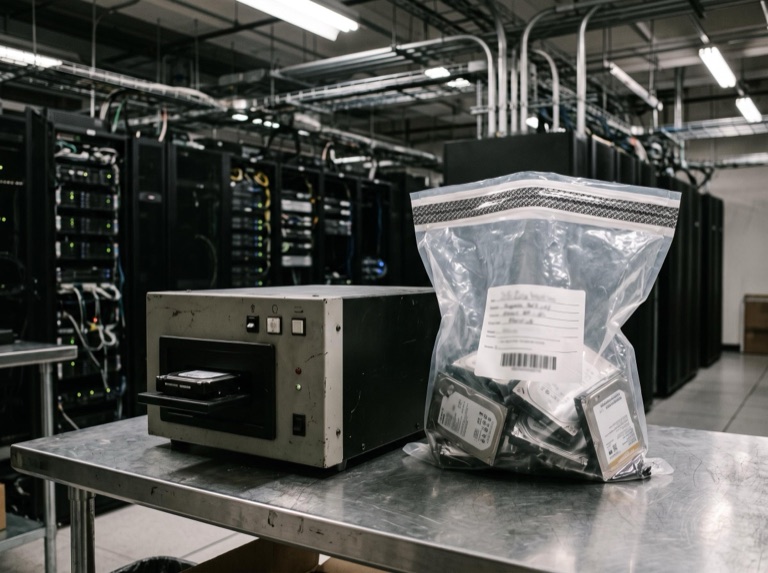
Two of the implementation specifications are required (disposal and media re-use); the other six are addressable, which means the facility must assess them and either implement them or document an equivalent alternative.
HIPAA requires a documented risk analysis but sets no fixed schedule: HHS calls it ongoing. Many buyers expect one no more than 12 months old, covering the facility you’ll use.
Enforcement is real on both counts: a pediatric practice paid $31,000 in 2017 for having no BAA with its records-storage vendor, and Fresenius Medical Care paid $3.5 million in 2018, partly for weak facility access and device and media controls.
Use this table when you evaluate a facility. Ask for the documents behind each line before you sign.
Want these numbers for your own deployment? and we’ll reply with the providers that fit, with their prices.
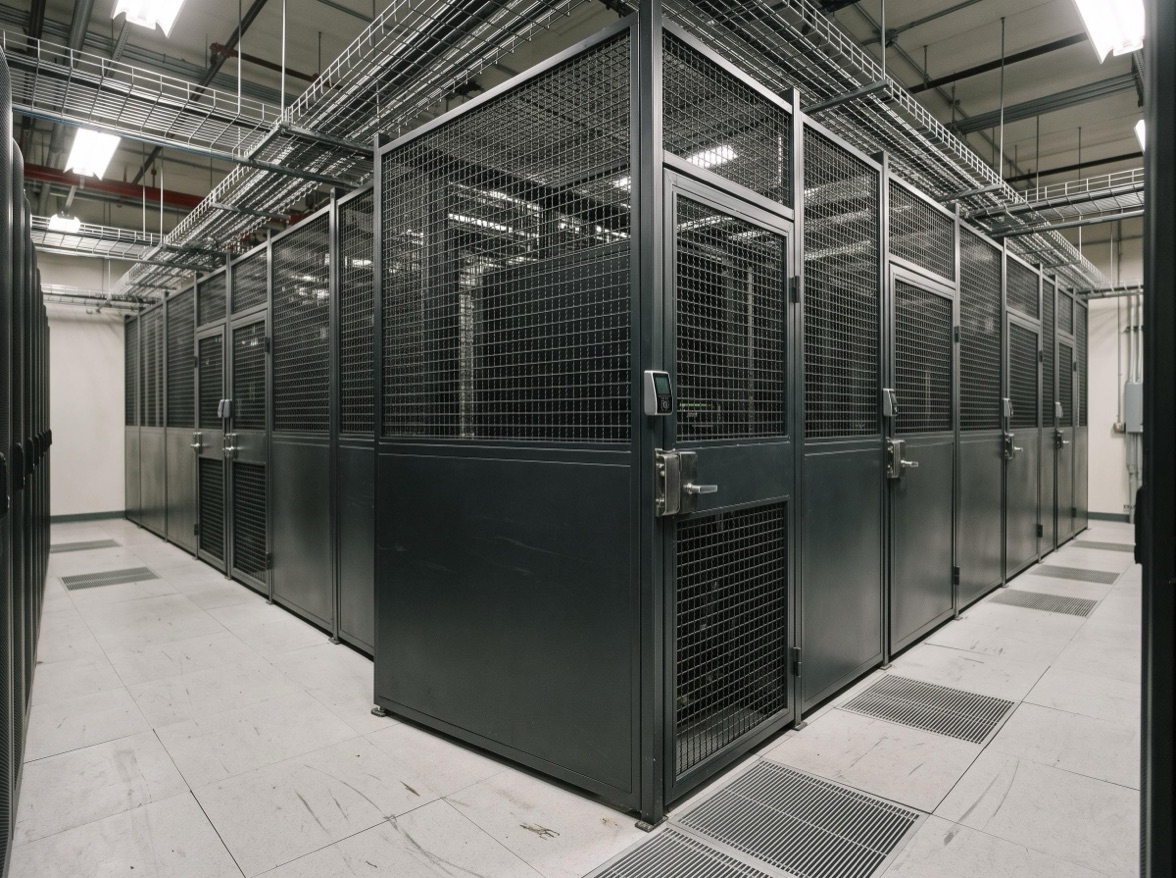
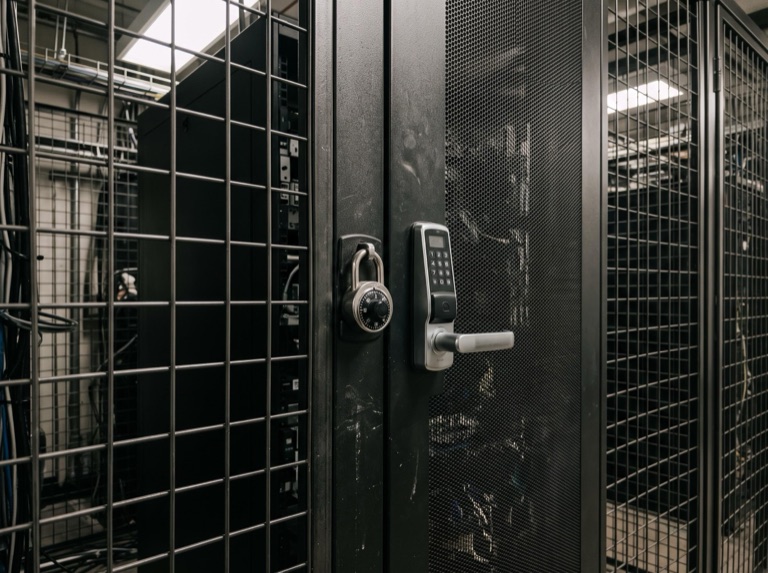
HIPAA doesn’t require a private cage. It requires documented physical access controls: who can reach your systems, how access is approved and removed, and how entry is logged.
Works when the facility logs access at the cabinet, lets you manage the access list and can produce the records for your equipment quickly. Logs that only show who entered the data hall are harder to defend in an audit.
A separate perimeter and clearer access records. Often preferred for frequent audits, highly sensitive records such as substance-use treatment data under 42 CFR Part 2, or when your auditor asks for isolation.
Organizations with 1–6 racks rarely need a full cage. Smaller cages from mid-tier operators give a locked perimeter at a fraction of the cost. See private cage pricing.
A colocation BAA is narrower than one with a cloud or SaaS provider: the facility deals with your hardware, not your data. The agreement should reflect that and still cover what the rule requires.
Under 45 CFR §164.504(e) and §164.314(a), the agreement has to cover a set of minimum terms. For a colocation facility, each one has a practical meaning:
Ask for audit-support terms too, even though the rule doesn’t require them: who sends you logs and documents, and how fast. Some providers have a standard colocation BAA; some negotiate one; a few decline. We find out which before you see the shortlist.
The physical safeguards are the same for every workload. The infrastructure behind them isn’t.
Models trained on properly de-identified data can fall outside HIPAA; training pipelines, patient-facing inference and EHR integrations that touch identifiable data don’t. They need a BAA and documented safeguards, often with GPU density. See high-density colocation.
Hosting for EHR systems usually comes with a BAA, a SOC 2 Type II report, documented access controls and redundant power to the cabinet. See A+B power and SOC 2 colocation.
PACS archives, DICOM storage and genomics combine large storage with GPU compute. Size the footprint and power, then check the safeguards.
Substance-use disorder records under 42 CFR Part 2 carry extra disclosure rules. Tell us if they’re involved so the shortlist reflects it.
HIPAA isn’t a price tier. Facilities that can meet the physical safeguards charge market rates; the documentation is their overhead, not a line on your invoice.
Who asks us for HIPAA colocation, and what their options include.
There’s no certificate to check, so every provider can use the phrase.
Every result claims it. Website copy and security PDFs don’t replace a signed BAA and written §164.310 safeguards.
Mature programs, but minimums, pricing and sales cycles that may not fit 2–6 racks.
Better pricing and flexibility, but the BAA, risk analysis or written policies may be out of date. Your legal team finds out late.
Send your requirements once.
We match them against prices and specs we already hold from 500+ providers.
You get the providers that fit, with prices, and call the ones you pick.
You never pay us. Providers cover it.
You send the specs. We find the options. You decide.

Tell us what you're deploying, where you want it, and when you need it. Send the specs you have; we'll help with the rest.
Estimates are fine. No perfect RFP needed.
We filter our network of 500+ providers down to a few that fit, then email you their names and estimated all-in pricing for your requirements.
 Provider names & matched optionsEstimated total, with inclusions & extrasAvailability & key terms

Like the options? Contact the providers directly. Need more detail? Call or email us. We're here to help, not push you.
 Go directly to the providers you like
 Ask us questions whenever you need
Your price is the same as going direct.
Review the options before deciding on a call.
5,000+ clients helped.

See how we helped teams secure colocation with the right power, pricing, and providers.
Prices, checklists and market notes from the same desk.
Clients helped since 2004
to Buyers
Worldwide providers
in 48 h
No. HHS doesn’t certify facilities and doesn’t recognize private “HIPAA certified” labels. What you can check is evidence: a signed business associate agreement, written §164.310 physical safeguards, a current risk analysis, and reports such as SOC 2 Type II or a HITRUST certification. A facility that says it is “HIPAA certified” is using marketing language.
Usually, yes. HHS treats a provider that maintains ePHI as a business associate even if it can’t read it, and remote hands or media handling make that clearer. HHS hasn’t ruled on pure space-and-power colocation, so most healthcare compliance teams simply require a signed BAA before ePHI reaches the facility. Some providers sign readily; some don’t.
Four standards: facility access controls, workstation use, workstation security, and device and media controls. In practice that means written access policies, cabinet-level access logs, rules for what staff may do near your equipment, and a documented chain of custody for hardware with ePHI. Disposal and media re-use are required specifications; the other six are addressable.
HIPAA requires documented physical access controls, not a cage. A shared cabinet can work if the facility logs access at the cabinet and you control the access list. A private cage makes the records unambiguous and suits frequent audits or highly sensitive records; quarter and half cages fit 1–6 racks at a fraction of a full cage’s cost.
The HITECH Act (2009) and HHS’s 2013 Omnibus Rule made business associates, and their subcontractors, directly liable for Security Rule compliance. So a facility that is your business associate can face OCR enforcement itself for weak physical safeguards, not only through its contract with you. A provider that treats HIPAA as only your problem hasn’t caught up.
They complement each other. A SOC 2 Type II report shows the facility’s controls worked over a period and helps your risk analysis; it doesn’t replace a BAA or address §164.310 point by point. Most healthcare buyers ask for both, and enterprise customers often require both from your providers.
Six things: its BAA template, written §164.310 policies, the date and scope of its latest risk analysis and who did it, its access-log retention and turnaround for log requests, its device and media disposal process, and its breach-notification procedure with the deadline it will commit to. Facilities that produce all six quickly are worth shortlisting.
Yes. This is the part of the market that’s hardest to find on your own: large operators prefer bigger footprints, while mid-tier and regional providers with current HIPAA documents take quarter and half cages and 1–6 racks. You get matched options by email within 48 hours once the requirements are clear, with the BAA status for each.
No. You don’t pay us. Providers share their existing standard sales commission with QuoteColo, so there’s no added fee or markup on your provider quote.


