
Skip to content

Round trips, fiber routes, exchanges and edge markets

Low-Latency Colocation Providers: What Actually Determines Your RTT, and How to Find the Right Facility

Latency in colocation is set mostly by distance: light in fiber covers about 200 km per millisecond, so every 100 km of fiber route adds about 1 ms of round trip before any switch is involved. Between US hubs, measured round trips run from about 18–19 ms (Virginia to Chicago or Toronto) to 67–69 ms (Virginia to California). Inside one building, a cross-connect adds microseconds; choosing the right building matters more than any equipment.

Updated November 2026 · Bob Spiegel, Founder, QuoteColo
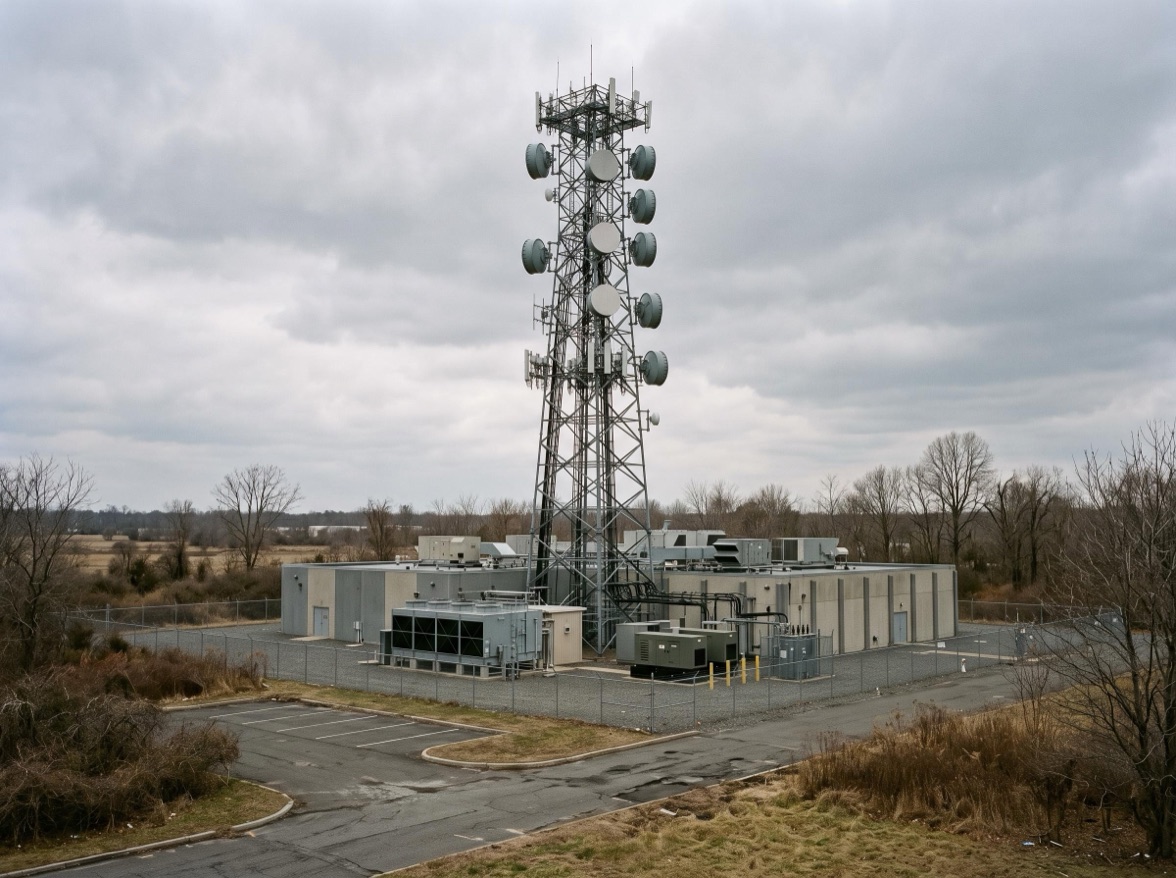
A steel telecom tower with microwave dishes beside a low data center building on flat land under an overcast sky
Bob Spiegel

“Tell me what you’re deploying; I’ll come back with real options from a network built over 20 years.”

— Bob Spiegel, Founder, QuoteColo

From our desk, November 2026

1 ms
of round trip per 100 km of fiber route, from physics alone
19 ms
round trip Virginia–Chicago, measured on Microsoft’s backbone (July 2026)
67–69 ms
round trip Virginia–California on the same backbone
397
networks in PeeringDB at 350 East Cermak, Chicago’s main interconnection building (November 2026)

Round trips from Microsoft’s published Azure latency medians (30 days to 30 July 2026); network count from PeeringDB, read 17 November 2026.

What actually determines latency in a colocation deployment

“Low-latency colocation” as a search filter is close to useless: every facility uses it. Four things set the number you’ll actually see, in this order.

  1. STEP 1

    Distance in glass

    Light in fiber covers about 200 km per millisecond, about 5 µs per km: 1 ms of round trip per 100 km of route. A 500 km route costs about 5 ms before any equipment. Hollow-core fiber cuts that by about a third, but few routes offer it yet.

  2. STEP 2

    The actual fiber route

    Long-haul fiber follows highways, railways and utility easements, so route miles run well above map miles. Ask for route miles between your facility and your target, not city-to-city distance.

  3. STEP 3

    Hops and cross-connects

    A modern switch adds under 1 µs, a trading switch 3–100 ns; sending a 1,500-byte packet takes 12 µs at 1G and 1.2 µs at 10G. An internet path between nearby buildings adds hops and queueing; a cross-connect in one building adds almost nothing.

  4. STEP 4

    Your own application

    If your software takes 50 ms to answer, 2 ms or 5 ms of network hardly matters. If it answers in microseconds, the network is the whole budget.

RTT benchmarks: latency between major US colocation markets

Measured round trips between cloud regions in the main US hubs. Colocation in the same metros sees similar times over good carrier routes; your carrier and route can move them by a few milliseconds.

Round trip between US regions (Microsoft Azure backbone, July 2026)

  • Virginia – Toronto
    18 ms
  • Virginia – Chicago
    19 ms
  • Arizona – California
    19 ms
  • Chicago – Toronto
    19 ms
  • Virginia – Texas
    35 ms
  • Texas – California
    35 ms
  • Chicago – Texas
    38 ms
  • Virginia – California
    67–69 ms

Medians over the 30 days to 30 July 2026, as published by Microsoft. For pairing sites for disaster recovery, see multi-city colocation quotes; for routes abroad, international colocation.

Want these numbers for your own deployment? and we’ll reply with the providers that fit, with their prices.

Latency requirements by workload: how tight is your budget?

The gap between high-frequency trading and a game server is three orders of magnitude. Know where your constraint is before you choose a building.

WorkloadLatency budgetWhat it connects toWhat that means for the facility
High-frequency tradingMicroseconds inside the exchange’s data centerThe matching engine: NYSE in Mahwah, Nasdaq in Carteret (Equinix NY11), Cboe in Equinix NY5, CME in AuroraExchange colocation where the engine sits; nothing else is close
Algorithmic tradingLow milliseconds to the exchangeMatching engines and market-data feedsA nearby building with short, known routes to the exchange
Market-data distributionLow and steady, regionallyData-feed providers and exchangesCarrier hotels where the feed providers are on-net
Real-time AI inferenceNetwork a small part of a sub-100 ms responseUsers, API gateways, application serversPrimary or edge markets near users
Online gamingRiot targets under 35 ms to 70% of players; NVIDIA’s GeForce NOW needs under 80 msPlayers in a regionEdge and primary markets matching player geography
CDN and streamingShort paths to access networksInternet exchanges and large ISPsFacilities with exchange ports and broad peering
Voice and videoUp to 150 ms one way (ITU-T G.114); jitter under 30 ms (Cisco)ISPs, SIP and cloud on-rampsSteady paths matter more than the minimum
Database replicationUnder about 5 ms for synchronous replicationA second siteSame metro for synchronous; see multi-city quotes for DR pairs

Carrier hotels, edge colo, and primary markets: which you actually need

Three kinds of facility, three different latency positions.

  1. Carrier hotel

    Hundreds of networks in one building

    Latency position

    Your carrier, exchange or cloud on-ramp is a cross-connect away: microseconds. PeeringDB lists 216–397 networks at buildings such as 60 Hudson Street and 350 East Cermak.

    Best for

    Market data, peering-heavy networks, multi-cloud. See carrier hotel colocation.

  2. Primary market

    Good carriers, not the deepest

    Latency position

    A few milliseconds within the metro to the main interconnection buildings, over carrier circuits or metro cross-connects.

    Best for

    SaaS, enterprise, AI and compliance workloads with budgets of 10 ms or more.

  3. Edge market

    Closer to the users

    Latency position

    Shorter distance to regional users, thinner interconnection: the median US facility in PeeringDB lists 3 networks.

    Best for

    Game servers, CDN nodes and streaming for a regional audience.

Key markets for latency-sensitive colocation

Where latency-driven buyers land, and why.

MarketWhy latency-driven buyers land hereNumbers to know
New York and New JerseyUS equities and options: NYSE in Mahwah, Nasdaq in Carteret, Cboe in Equinix NY5; CME’s Treasury and FX markets also run in NY5Chicago (350 East Cermak) to Carteret: 12.99 ms round trip by fiber; about 8 ms by microwave (3.982 ms one way from Aurora)
ChicagoFutures: CME’s matching engine in Aurora; 350 East Cermak as the interconnection hubAurora to Carteret by fiber: 14.59 ms round trip
AshburnCloud on-ramps next to the largest cloud regions; not an exchange marketVirginia–Chicago 19 ms, Virginia–Texas 35 ms (Azure, July 2026)
Los AngelesTrans-Pacific routes through One Wilshire; cables such as JUPITER and PLCN land nearbyCalifornia–Tokyo 107 ms, California–Singapore 170 ms (Azure, July 2026)
DallasCentral US: similar distance to both coastsTexas–Virginia and Texas–California both about 35 ms
MiamiLatin America and the Caribbean through the NAP of the AmericasThe lowest-latency US gateway south

Round trips on cloud backbones from Microsoft’s published medians; exchange routes from Zayo (March 2026) and McKay Brothers (2016). For the buildings themselves, see carrier hotel colocation.

How to evaluate a facility’s latency claims before you sign

Five questions separate a real latency position from a marketing line.

Ask forWhy
The measured round trip to your target: the exchange, cloud on-ramp, exchange point or carrier“Low latency” is not a number. A round trip to a named target is.
Where it was measured from: the meet-me room, a patch panel or a cabinet portThe path from your cabinet to the meet-me room adds to the quoted figure.
Route miles to the targetRoute miles set propagation delay; map distance doesn’t.
Jitter and packet loss, not only the averageA steady 7 ms often beats a jumpy 5 ms for voice, video and market data.
A test port before you signRun your own measurements for a few days. A facility that won’t allow testing deserves extra scrutiny.

Cross-connects to your target are where latency positions are built; ask for the rate card too. See carrier-neutral colocation for what to check on carrier lists.

What low-latency colocation costs in 2026

The rack is the predictable part. What you connect to, and how, decides the bill.

Cost linePublished priceSource
Rack in a major metro$1,600–1,800 a month, full 48U rack, 5 kW, 1 GbpsOur November 2026 price sheet (New York)
Cross-connect at an interconnection hub$200–600 a month; $500–1,000 to installPublished rate cards and Equinix filings, 2025–2026
NYSE colocation cabinet$900–1,200 per kW a month, plus $5,000 to install (8 kW is about $9,600 a month)NYSE price list, 16 November 2026
NYSE fiber cross-connect$500 to install, $600 a monthNYSE price list, 16 November 2026
NYSE 10 Gb trading-network connection$24,000 a monthNYSE price list, 16 November 2026
Nasdaq colocation power$550 per kVA a month, no separate cabinet feeNasdaq filings with the SEC, 2026
Nasdaq cross-connect between customers$550 to install, $385 a month per sideNasdaq filing, 30 October 2026
IP transitAbout $0.10–0.18 per Mbps a month on 10G–100G portsTeleGeography, 2024–2026

Exchange colocation is its own product, priced per kW and per connection by the exchange. A building near the exchange with short routes to it costs market rates plus the circuits.

Who we match to low-latency colocation providers

The buyers behind most latency-driven requests.

WhoLatency situationWhat the options include
Trading firmsSub-millisecond to a matching engineExchange colocation where the engine sits, or buildings with short routes to it
Market-data distributionLow, steady latency to data feedsCarrier hotels where the feed providers are on-net, with cross-connect pricing
Real-time AI inferenceNetwork a small part of a sub-100 ms responsePrimary and edge markets near users, with measured round trips to your gateway
Online gamingTens of milliseconds to players in a regionEdge and primary markets matching player geography, quoted together
CDN and streamingShort paths to access networksFacilities with exchange ports and broad peering
Multi-cloudA few milliseconds to cloud on-rampsBuildings on the AWS, Azure and Google on-ramp lists

Why “low latency” on a provider’s website doesn’t settle it

Every facility markets low latency. The number that matters is the round trip from your cabinet to your target.

THE DIY WAY

You search for “low-latency colocation”

Every result claims it. Without route miles, cross-connect options and a measured round trip to your target, a carrier hotel and an ordinary facility look the same.

THE DIY WAY

You pick the closest building on a map

Fiber follows rights-of-way, not straight lines. The nearer building can have the longer route to the exchange or network you need.

THE DIY WAY

You compare average round trip only

For audio, video and market data, jitter can matter more than the average. A slightly slower but steadier path often performs better.

How it works

You send the specs. We find the options. You decide.

STEP 1

Send your requirements.

Tell us what you're deploying, where you want it, and when you need it. Send the specs you have; we'll help with the rest.

HardwareRacks & kWLocationStart date

Estimates are fine. No perfect RFP needed.

STEP 3

Take the next step. On your terms.

Like the options? Contact the providers directly. Need more detail? Call or email us. We're here to help, not push you.

  • Go directly to the providers you like
  • Ask us questions whenever you need

Get 2–4 qualified options in 48 hours

Free for buyers

Your price is the same as going direct.

Comparable prices by email

Review the options before deciding on a call.

Trusted service since 2004

5,000+ clients helped.

By clicking here, I state that I have read and understood the Terms and Conditions

Case studies

See how we helped teams secure colocation with the right power, pricing, and providers.

Leonard Roszkowski

CEO Elemental Energy Solutions

Problem: Needed to source ASIC servers domestically. Skeptical about working with a new organization.

What we did: Connected them to buyers, sellers, and infrastructure partners across deployments. Removed procurement and logistics overhead entirely.

Result: Rapid organizational growth in a short period. Now uses QuoteColo as an ongoing procurement interface across hardware and infrastructure.

Noel Frutasio

CEO FSN Services and Communications

Problem: Regularly needed colocation space across multiple US states and time zones. Difficult to navigate the market without deep industry knowledge.

What we did: Defined requirements in one meeting, then delivered proposals with multiple carrier and data center options across every target market.

Result: Placed in 4 cities. Contracts signed quickly. Multi-state colocation needs resolved through a single point of contact.

Tim Mandell

DC Mining / MDI Access

Problem: Needed reliable options for crypto mining containers and equipment, along with industry partners who could support real deployment requirements.

What we did: Connected the project with relevant mining infrastructure and equipment resources through the QuoteColo network, simplifying the search and evaluation process.

Result: Gained a clearer path to suitable mining infrastructure, equipment and industry contacts without having to source every option independently.

5,000+

Clients helped since 2004

No Cost

to Buyers

500+

Worldwide providers

Quotes

in 48 h

Frequently asked questions: low-latency colocation

What RTT can I expect from a carrier hotel vs a standard colocation facility in the same market?

In a carrier hotel, a cross-connect to a carrier or exchange in the same building adds microseconds. From another facility in the same metro, you reach that network over a carrier circuit or metro link, typically adding around a millisecond or more depending on route and hops. That gap doesn’t matter for most enterprise workloads; for trading it can be the whole budget.

How much faster is a cross-connect vs a standard internet path?

A cross-connect is a short fiber run inside one building: at about 5 µs per km, a 200-meter run adds about 1 µs. An internet path between two nearby buildings crosses several routers and can queue, adding milliseconds. The cross-connect removes those hops entirely.

What is the minimum RTT achievable between New York and Chicago?

By fiber, about 13 ms round trip: Zayo publishes 12.99 ms between 350 East Cermak in Chicago and Carteret, New Jersey (March 2026). Microwave links are faster because the path is straighter and radio travels near the speed of light in air: McKay Brothers published 3.982 ms one way from Aurora to Carteret, about 8 ms round trip, with less bandwidth than fiber.

What's the difference between RTT and one-way latency?

Round-trip time is there and back; one-way latency is one direction, roughly half the round trip on symmetric routes. Most tools report round trip. Trading systems often care about one direction, the order path, and where the outbound and return routes differ, each direction has to be measured separately.

Is exchange co-location the only way to achieve sub-millisecond to-exchange latency?

For microseconds, yes: you need to be in the exchange’s own data center, such as NYSE’s in Mahwah or Nasdaq’s in Carteret. For low milliseconds, a nearby building with a short, known route can work. NYSE’s published price list puts its colocation at $900–1,200 per kW a month (November 2026), plus connectivity.

Do I need a carrier hotel, or will a primary market data center work?

It depends on your target. If you need a few milliseconds or less to a specific exchange, data feed or subsea cable, a carrier hotel with that network on-net is the usual answer. For cloud connectivity, SaaS and budgets of 10–50 ms, a well-connected primary-market facility usually does the job for less.

How does jitter affect my latency-sensitive application?

Jitter is how much the round trip varies. For voice, video and market data, a steady path often beats a faster but uneven one: Cisco’s guidance for voice is jitter under 30 ms, and ITU’s Y.1541 allows 50 ms. Ask facilities and carriers for jitter and packet loss figures, not only averages.

What markets are best for CDN and gaming latency in the US?

Match the markets to your users. Three or four sites usually cover the country: one in the Northeast or Ashburn, one in Chicago or Dallas, and one in Los Angeles or the Bay Area. Measured round trips between those hubs run about 19–38 ms, and users connect to the nearest. Riot, for example, targets under 35 ms for 70% of its players.

Does QuoteColo find low-latency colocation for small deployments?

Yes. Most latency-sensitive deployments are 1–4 racks: algorithmic trading, inference nodes, game servers. The constraint is usually cross-connect minimums and pricing, not rack minimums. Send your target and your round-trip budget, and you get matched options by email within 48 hours once the requirements are clear.

Does QuoteColo charge for this service?

No. You don’t pay us. Providers share their existing standard sales commission with QuoteColo, so there’s no added fee or markup on your provider quote.