

Skip to content

Facility moves, cloud repatriation, first moves out of the office

Colocation Migration: How to Move Your Servers, Avoid Double Rent and Not Lose a Week to DNS Propagation

Plan on 4–10 weeks to move between two colocation facilities in the same metro and 10–20 weeks to move workloads from the cloud into colocation, counted from a signed contract at the destination. Most delays come from the destination: power, cross-connects and carrier circuits. An off-net carrier circuit alone can take 45–75 business days, so start the search about six months before your current contract ends.

Updated November 2026 · Bob Spiegel, Founder, QuoteColo

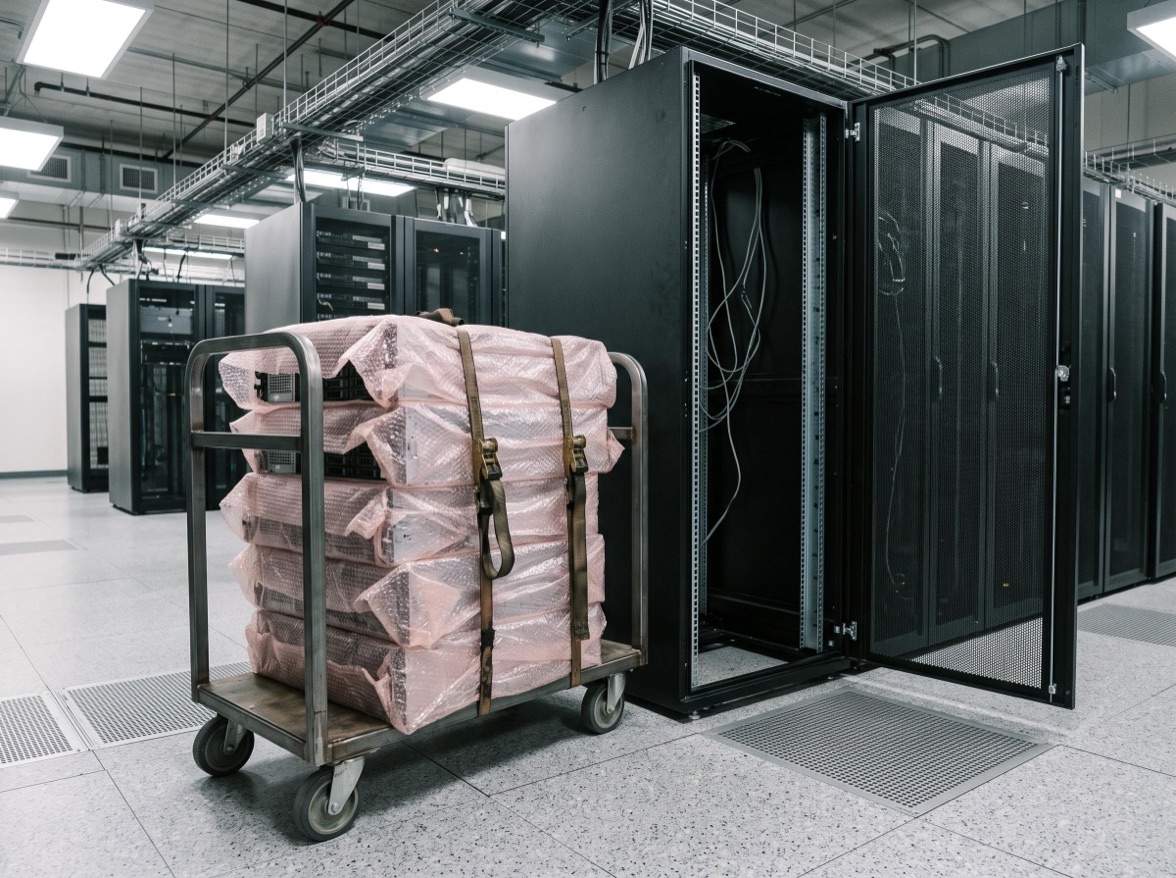
Servers wrapped and strapped on a cart next to an empty rack in a colocation data hall, ready to be moved
Bob Spiegel

“Tell me what you’re deploying; I’ll come back with real options from a network built over 20 years.”

— Bob Spiegel, Founder, QuoteColo

From our desk, November 2026

6 months
before the end of your contract: when to start the destination search
45–75
business days for an off-net internet or Ethernet circuit (Lumen’s own install estimate)
24 hours
Equinix’s provisioning standard for up to three cross-connects
22 hours
to copy 10 TB over 1 Gbps at full line rate; about 2.2 hours per TB

Lead times from Lumen’s and Equinix’s published documentation, read November 2026. Transfer time is arithmetic at full line rate; real transfers run slower.

What actually triggers a colocation migration

Migrations rarely start as a choice to upgrade. They start with one of these, and each sets a different deadline and different needs at the destination.

  1. Planned

    The contract is ending

    Pressure

    Predictable, yet teams still run out of time. Published colocation terms give 30–120 days’ notice; miss it and you renew for another term or pay holdover, 150–200% of the last monthly rate in the contracts we checked.

    You need more power per rack

    Pressure

    GPU or dense compute needs 15–30 kW a rack in a hall built for 5–8 kW. Less urgent, but the destination has to match the hardware exactly.

  2. Forced

    Your provider was acquired

    Pressure

    Pricing, support and renewal terms change. Check the notice and change-of-control clauses before the auto-renewal date.

    The facility is closing or sold

    Pressure

    The hardest deadline: the date isn’t yours, and other tenants are looking for space in the same metro.

  3. Strategic

    Leaving the cloud

    Pressure

    Steady workloads move to your own hardware in colocation, and the facility is chosen before the hardware exists. In Broadcom’s 2026 survey of 1,800 IT leaders, 83% were considering moving workloads out of public cloud and half had already moved some.

    Out of the office server room

    Pressure

    A first move into colocation: shipping, racking and moving from a local network to cross-connects.

Migration types and realistic timelines

These are planning ranges from a signed destination contract, not best cases. What sets each one is how fast the destination can deliver power and connectivity, and how long you run both sites in parallel.

Weeks from a signed destination contract to a finished move

  • Facility to facility, same metroTruck across town; parallel run
    4–10 weeks
  • Facility to facility, new metroShipping, new carriers, routing changes
    6–14 weeks
  • On-premise to colocationFirst move out of an office or server room
    6–16 weeks
  • Cloud to colocationBuy hardware, replicate data, cut over
    10–20 weeks
  • Cloud to colocation, GPU serversHardware lead times dominate
    16–30 weeks
  • Forced move (facility closing)Window set by the closing site
    2–6 weeks

Planning ranges from our experience with destination searches. Hardware lead times, data volume and your own team’s availability move them either way.

Want these numbers for your own deployment? and we’ll reply with the providers that fit, with their prices.

What actually causes colocation migrations to go wrong

Most failures aren’t technical. They are process gaps that open before any hardware moves.

What goes wrongWhat happensHow to avoid it
The destination search starts too lateThe facility you want can’t deliver power in time, and you negotiate an extension with no leverage.Start six months before the contract ends, not at the 90-day notice.
The destination is scoped on rack rateThe cage, the cloud on-ramp or liquid cooling isn’t actually ready when you arrive.Get provisioning dates for power, cross-connects and cooling in writing before you sign.
The parallel run is underestimatedValidation, network issues and routing changes add weeks of double rent.Budget four to six weeks of parallel run for a production move, more with compliance testing.
A hard cutover has no rollback plan“Ship it back if it doesn’t work” becomes the plan.Write the rollback trigger, the procedure and the maximum tolerable downtime first.
DNS and IP changes come lastTraffic keeps going to old addresses; hard-coded IPs break partner integrations.Lower DNS TTLs to a few minutes and wait out the old TTL, often two days, before the switch. Audit hard-coded addresses before setting a date.
Carrier circuits are ordered lateAn off-net circuit becomes the longest item in the plan.Order cross-connects and circuits the week you sign the destination contract.

Parallel run vs hard cutover: which migration pattern to use

The choice decides your double rent, your downtime and your risk.

Parallel runHard cutover
How it worksBoth sites live; workloads move one at a time and are validated before the old copy is switched off.The old site goes dark at a set time; equipment moves; the new site powers up.
DowntimeNone for most workloads.The move window, plus anything that goes wrong.
Double rentYes: plan four to eight weeks at the old site after the new one is ready.Little or none.
Best forProduction with uptime commitments, audited environments, complex integrations, revenue-earning GPU inference.Development and staging, workloads with maintenance windows, DR sites, first moves out of the office.
Before you startAn acceptance checklist that defines “passed” at the new site.The new site fully provisioned and tested, cross-connects live, DNS TTLs lowered, rollback written down.

How to minimize the double-rent period

Double rent is the price of a safe move. How long it lasts depends on preparation.

What sets itDelay if unmanagedHow to shorten it
Destination power and space2–6 weeksOrder the space and circuits the week you sign, with dates in the contract.
Cross-connects and carrier circuitsDays to monthsOrder everything at signature; off-net circuits first.
IP and DNS changesDays to weeksLower TTLs ahead of the move and update hard-coded addresses before you start.
Validation at the new site1–4 weeksWrite the acceptance checklist before the migration starts.
Notice to the old facility30–90 daysSend notice the day you sign with the new facility: the clock runs from the notice, not from the day you leave.
Compliance evidence2–6 weeksAsk the destination for its SOC 2, HIPAA or PCI documents before the move, not after.

Cloud-to-colocation migration: how repatriation actually works

Leaving the cloud isn’t a move: there’s nothing to ship. You build a new environment in colocation while the cloud keeps running, then move the traffic. The facility is the first decision, not the last.

  1. STEP 1

    Pick what moves

    Steady workloads that run busy most hours gain the most. Compare two to three years of cloud cost with hardware plus colocation, starting with your largest bills. Spiky and experimental workloads usually stay.

  2. STEP 2

    Choose the facility, then order hardware

    The facility has to fit the hardware’s power and cooling before anything ships. Lead times for standard servers were reported at 21–26 weeks in mid-2026, so order once the facility is chosen and ship to its receiving dock.

  3. STEP 3

    Copy the data

    At full speed, 1 Gbps moves about 2.2 hours per TB; 100 TB takes over nine days. A Direct Connect or ExpressRoute link to the new facility gives a steady path, and costs less per GB to leave over.

  4. STEP 4

    Cut over, then switch off

    Run both until the new environment passes your checks: two to four weeks for internal systems, four to eight for revenue-earning ones. Check reserved-instance and savings-plan terms before you switch the cloud off.

How long the data takes to copy, at full line rate

  • 10 TB over 1 GbpsA typical database and file store
    22 hours
  • 50 TB over 1 Gbps
    4.6 days
  • 100 TB over 1 Gbps
    9.3 days
  • 100 TB over 10 GbpsA 10G link to the new facility
    22 hours

Decimal terabytes at 100% of the line rate; real transfers run slower, so add a quarter or more.

What leaving the cloud costs in data transfer

CloudStandard price to move data outIf you’re leaving
AWS$0.09 per GB over the internet (first 10 TB a month); $0.02 per GB over Direct Connect in the USFree data transfer out on request to AWS Support, at least two months ahead; all your data or one whole service, finished within 180 days. Not for transfers over Direct Connect.
Microsoft AzurePer GB, by zone and routeCredit for the transfer if you move everything within 60 days and then cancel all subscriptions. Not for ExpressRoute.
Google CloudPer GB, by destinationAn exit notice starts a fixed window; you stop using the services when it ends.

Per-GB prices add up: 100 TB at $0.02 per GB is about $2,000. Read each cloud’s current exit terms before you plan the transfer; they change.

Where QuoteColo fits in a colocation migration

We find the destination. Finding it before the deadline gets tight is what decides whether the migration goes well.

  1. What we do

    Find and compare destinations

    Match

    Your current specs and deadline against facilities with power available at your density, the cooling, carriers and compliance you need.

    Flag

    Lead times that would stretch the move: a 45-day cross-connect to a cloud on-ramp, a 60-day queue for high-density power.

    Compare

    Same-metro options and a different-metro option side by side, with price and latency differences.

  2. What we don’t do

    The move itself

    Physical work

    Packing, shipping, racking and cabling: your team, the destination’s remote hands or a migration firm.

    Network cutover

    BGP, DNS and firewall changes are your engineers’ work. We flag what the destination needs for them.

    Your exit

    The notice and any holdover are between you and your current provider. We can tell you what’s typical.

Migration pre-flight checklist

Work through this before you sign with a destination and before any hardware moves. What you find before the move causes delays; what you find after causes outages.

Destination: before you sign

  • Usable kW per rack in writing (after the 80% rule)
  • A+B power to your cabinet, not just the building
  • Cooling that fits your hardware density
  • Lead time for each cross-connect, on-ramp and circuit
  • Current SOC 2, HIPAA or PCI documents if you need them
  • Remote hands rates (published ones run $125–250 an hour in business hours) and receiving for shipments sent straight from the supplier

Old facility: the day you sign

  • Send termination notice under the contract’s terms
  • Get any holdover rate in writing
  • Book access for equipment removal
  • Check separate notice periods for cross-connects and circuits

Network: two weeks before cutover

  • Audit DNS records pointing at the old site
  • Lower TTLs to a few minutes, at least the old TTL ahead of the cutover
  • Find hard-coded IPs in apps, partners and monitoring
  • Confirm which ASN will announce your space at the destination
  • Test cloud on-ramp connectivity before moving traffic

Hardware and validation

  • Transport booked with both facilities, or shipping and packaging confirmed
  • Serial numbers and asset tags recorded
  • Acceptance checklist and rollback procedure written
  • Monitoring live at the new site; on-call rota for the move

Why migrations run long before a single server moves

Most migrations that go wrong go wrong at the destination search, weeks before the truck.

THE DIY WAY

You start at the 90-day notice

The facility you want has a 60-day power lead time, the off-net circuit takes months, and you renegotiate holdover with no leverage.

THE DIY WAY

You pick on the rack rate

The high-density cage isn’t ready, the cloud on-ramp isn’t in the building, and “liquid-ready” means a 90-day order. Each one stretches the double rent.

THE DIY WAY

You learn the lead times after signing

Provisioning dates for power, cross-connects and circuits decide your cutover date. Nobody quotes them unless you ask.

How it works

You send the specs. We find the options. You decide.

STEP 1

Send your requirements.

Tell us what you're deploying, where you want it, and when you need it. Send the specs you have; we'll help with the rest.

HardwareRacks & kWLocationStart date

Estimates are fine. No perfect RFP needed.

STEP 3

Take the next step. On your terms.

Like the options? Contact the providers directly. Need more detail? Call or email us. We're here to help, not push you.

  • Go directly to the providers you like
  • Ask us questions whenever you need

Get 2–4 qualified options in 48 hours

Free for buyers

Your price is the same as going direct.

Comparable prices by email

Review the options before deciding on a call.

Trusted service since 2004

5,000+ clients helped.

By clicking here, I state that I have read and understood the Terms and Conditions

Case studies

See how we helped teams secure colocation with the right power, pricing, and providers.

Leonard Roszkowski

CEO Elemental Energy Solutions

Problem: Needed to source ASIC servers domestically. Skeptical about working with a new organization.

What we did: Connected them to buyers, sellers, and infrastructure partners across deployments. Removed procurement and logistics overhead entirely.

Result: Rapid organizational growth in a short period. Now uses QuoteColo as an ongoing procurement interface across hardware and infrastructure.

Noel Frutasio

CEO FSN Services and Communications

Problem: Regularly needed colocation space across multiple US states and time zones. Difficult to navigate the market without deep industry knowledge.

What we did: Defined requirements in one meeting, then delivered proposals with multiple carrier and data center options across every target market.

Result: Placed in 4 cities. Contracts signed quickly. Multi-state colocation needs resolved through a single point of contact.

Tim Mandell

DC Mining / MDI Access

Problem: Needed reliable options for crypto mining containers and equipment, along with industry partners who could support real deployment requirements.

What we did: Connected the project with relevant mining infrastructure and equipment resources through the QuoteColo network, simplifying the search and evaluation process.

Result: Gained a clearer path to suitable mining infrastructure, equipment and industry contacts without having to source every option independently.

5,000+

Clients helped since 2004

No Cost

to Buyers

500+

Worldwide providers

Quotes

in 48 h

Frequently asked questions: colocation migration

When should I start looking for a new colocation facility if my lease is expiring?

About six months before the contract ends. Published colocation terms require 30–120 days’ notice, the facility you want may need weeks to deliver power at your density, and an off-net carrier circuit can take 45–75 business days on Lumen’s own estimates. Starting at the 90-day notice leaves you choosing between a rushed move and a holdover rate.

How long does a colocation migration actually take?

Plan on 4–10 weeks between two facilities in the same metro, 6–14 weeks to a new metro, and 10–20 weeks from the cloud into colocation, longer for GPU hardware. The clock starts at a signed destination contract, not when you start looking. Power, cross-connect and circuit lead times at the destination set most of it.

What is a parallel run and how long does it typically last?

A parallel run keeps both facilities live while you move workloads one at a time and check each one at the new site before switching the old copy off. Plan on four to six weeks for a standard production move, longer with compliance testing or many integrations. You pay rent at both sites for that time, so it belongs in the budget from the start.

How do I avoid paying double rent for too long?

Order every cross-connect and circuit the week you sign the destination contract, send termination notice to the old facility the same day, because the notice period runs from the notice, and write your acceptance checklist before the move starts so validation doesn’t drift. Each week of unneeded parallel run is a week of double rent.

What’s the difference between a hard cutover and a parallel run migration?

In a parallel run both sites are live and workloads move gradually, so there’s little downtime but several weeks of double rent. In a hard cutover the old site goes dark, the equipment moves and the new site comes up, which is faster and cheaper but needs the destination fully provisioned and tested first, and a written rollback plan.

Can QuoteColo help with cloud-to-colocation repatriation specifically?

Yes, with the facility choice, which comes first. We match your hardware’s power and cooling, the cloud regions you’re leaving and the on-ramps you need to facilities with power available, and you get matched options by email within 48 hours once the requirements are clear. In Broadcom’s 2026 survey of 1,800 IT leaders, 83% were considering moving workloads out of public cloud.

Do I need to hire a migration firm, or can I do this with my team?

A same-metro move is manageable with your own engineers for the move weekend plus remote hands at both sites; published rates run $125–250 an hour in business hours. Moves between metros often use a migration logistics firm for packing and transport while your team handles the network. Cloud repatriation is a new build, so it rarely needs one.

My provider was just acquired and I’m evaluating a move. How urgently do I need to act?

Read your contract now: the notice period, any change-of-control clause and the auto-renewal date. If renewal is within six months, the window to give notice may already be short. Start the destination search even before you decide; current options and prices give you leverage with the new owner.

What does QuoteColo charge for migration destination matching?

Nothing. You don’t pay us. Providers share their existing standard sales commission with QuoteColo, so there’s no added fee or markup on your provider quote.