Skip to content

Meet-me rooms, cross-connects, exchanges and cloud on-ramps

Carrier Hotel Colocation: Multiple Carriers, Cross-Connects and the MMR Ecosystem Explained

A carrier hotel is a colocation building where hundreds of networks meet in a shared meet-me room, so a carrier, an internet exchange or a cloud on-ramp is one cross-connect away instead of a new circuit across town. PeeringDB lists 397 networks at 350 East Cermak in Chicago and 216 at 60 Hudson Street in New York (November 2026). That reach costs extra: about $200–600 a month per cross-connect at premium hubs, on top of the rack.

Updated November 2026 · Bob Spiegel, Founder, QuoteColo

A 1930s Art Deco brick telecom building in a dense downtown, with antennas and microwave dishes on its setback roofs
Bob Spiegel

“Tell me what you’re deploying; I’ll come back with real options from a network built over 20 years.”

— Bob Spiegel, Founder, QuoteColo

From our desk, November 2026

$1,600–1,800
Full 48U rack, 5 kW, 1 Gbps in New York, Chicago, Los Angeles and Virginia
$1,500–1,750
The same rack in Dallas, home of the Infomart
$200–600
per cross-connect per month at premium interconnection hubs
20
of 1,381 US facilities in PeeringDB list 100 or more networks

From Bob’s November 2026 price sheet and capacity list (listings, not confirmed offers) and the October 2026 price index (50+ provider responses). Prices are per month, space and power, unless noted.

What makes a facility a carrier hotel vs standard colocation

The term is used loosely. A carrier hotel is a building where so many networks have equipment that reaching one is a short fiber run through a shared meet-me room (MMR). Many of the best known are old telecom buildings in big-city downtowns.
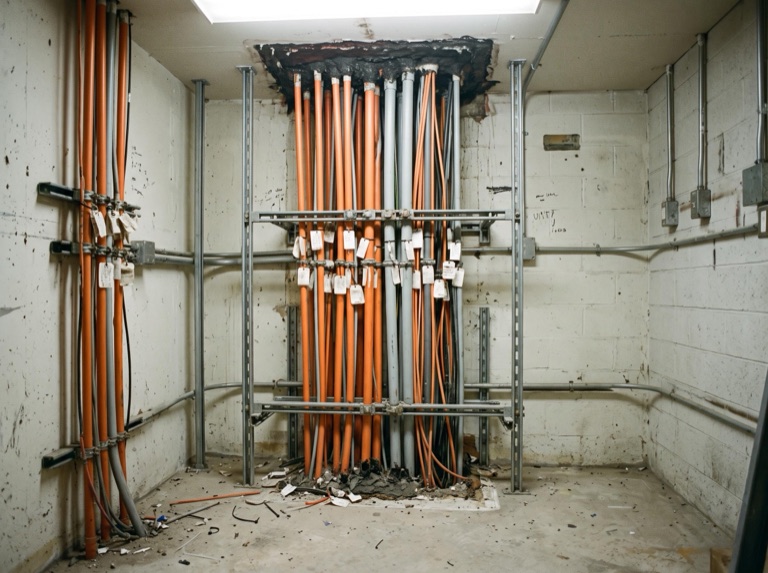
  1. The meet-me room

    Where the networks meet

    What it is

    The room where carriers, exchanges and cloud providers terminate their fiber, and where cross-connects between tenants are patched.

    Why it matters

    Your rack reaches a carrier through a fiber run of a few hundred feet, not a circuit built across the metro.

  2. The price

    Why carrier hotels cost more

    Inside the building

    A cross-connect at a premium hub runs about $200–600 a month and is usually installed in 1–5 business days. Equinix’s standard is 24 hours for up to three.

    Outside it

    A carrier with no equipment in the building has to bring in a new circuit. Lumen’s own estimate for an off-net internet or Ethernet circuit is 45–75 business days, longer if fiber has to be built.

  3. The alternative

    Carrier hotel or carrier-neutral facility

    Carrier hotel

    151–528 networks listed in PeeringDB at the carrier hotels in our table below (November 2026).

    Typical carrier-neutral facility

    The median US facility in PeeringDB lists 3 networks. For two transit carriers and a cloud on-ramp, a good carrier-neutral facility is usually enough.

Cross-connects: types, pricing and what you’re actually paying for

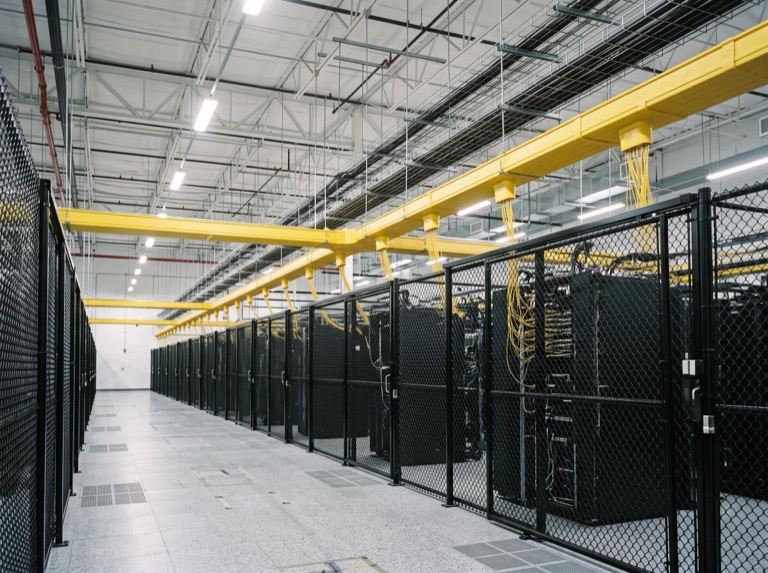
A cross-connect is a physical fiber or copper link between your cabinet and another party’s equipment in the same facility. It is the product a carrier hotel sells, and it is billed per circuit, every month, whatever traffic runs over it.
Cross-connect types

TypeWhat it connectsWhat to watch
In-building cross-connectYour cage to a carrier, exchange or cloud on-ramp in the same building, patched through the MMR.The most common kind. A monthly fee (MRC) per circuit plus a one-time install fee (NRC).
Between suites or operatorsYour operator’s suite to a carrier in another operator’s suite in the same building.Can run through the building’s own meet-me room, with fees from more than one party. PeeringDB lists 15 facility records at 60 Hudson alone.
Campus or metro cross-connectTwo buildings of the same operator on a campus or in a metro, or a dark fiber link between providers.Priced well above an in-building link. Used when the network you need is in the building next door.

Most carrier hotel cross-connects are single-mode fiber with LC connectors, which carries 10G, 100G and 400G. Multimode fiber is for short runs inside a suite; copper is for 1G and below, mostly in older buildings.

Cross-connect pricing by facility type

Where the cross-connect runsCross-connect, $/month (MRC)One-time install (NRC)What we’ve seen
Operator suite at a premium hub$200–600$500–1,000Equinix’s interconnection revenue in the Americas works out to about $365 per connection a month (Q3 2026 filings).
Building meet-me roomVaries, sometimes $0About $500165 Halsey Street publishes a $500 install and no monthly fee for a fiber cross-connect.
Riser or link to another buildingCan pass $1,000About $1,000ICE’s Chicago price list: a riser cross-connect is $1,000 to install and $1,050 a month (November 2025).
Regional or mid-tier facilityUsually lowerSet by the rate cardFewer networks on-net. A carrier you need may require an off-net circuit instead.

Cross-connects aren’t in the base rack quote. Four circuits at a premium hub add about $800–2,400 a month. Ask for the full rate card as a contract exhibit: verbal pricing on cross-connects is a common source of disputes later.

Want these numbers for your own deployment? and we’ll reply with the providers that fit, with their prices.

How to read an on-net carrier list (and what it actually tells you)

Every carrier hotel publishes a network count. A building with 200 networks on-net can still lack the two carriers your traffic needs, because most of any list is regional ISPs, CDN caches and enterprises. What matters is whether your networks are physically in this building’s MMR.

The networks most buyers check for

GroupExamples (AS number)What to check
Tier 1 transit carriersLumen (AS3356), Arelion, formerly Telia Carrier (AS1299), NTT (AS2914), Verizon (AS701), AT&T (AS7018), GTT (AS3257), Zayo (AS6461)That at least two you’d buy transit from are on-net here, not “available via circuit.” Cogent (AS174), whose Tier 1 status is disputed, is often on the same shortlist.
Content and CDN networksGoogle (AS15169), Cloudflare (AS13335), Akamai (AS20940)Whether they peer at the exchange in the building or take private peering, so your traffic to them skips transit.
Cloud on-rampsAWS Direct Connect, Azure ExpressRoute, Google Cloud InterconnectThat the building is on each cloud’s own location list. Otherwise you pay for a link to the building that is.
Internet exchangesEquinix Internet Exchange, DE-CIX, NYIIX, Any2Exchange and community exchanges such as FL-IX and Seattle IXWhich exchanges have a switch in the building, and what the port and the cross-connect to it cost.

On-net or via circuit?

On-net means the carrier has equipment in this building’s MMR. “Available” can mean it would build a circuit from a site across town.

This building or next door?

On a campus, the network may sit in the adjacent building. That makes it a campus cross-connect, at a higher price.

Whose suite is it in?

In buildings with several operators, ask which operator’s suite the carrier is in and how a cross-connect between suites is billed.

Check it yourself

PeeringDB lists the networks and exchanges at each operator’s facility. Use it to build the shortlist, then get the provider to confirm in writing.

Transit, peering and blended transit: choosing the right model in a carrier hotel

How you buy connectivity decides how many cross-connects you order and what the monthly bill looks like.

  1. One carrier

    Dedicated transit

    How it works

    One BGP session, or a static route, to one transit carrier that carries all your traffic. One cross-connect and one bill, priced per Mbps at the 95th percentile or as a flat port.

    Watch for

    No carrier redundancy. An outage or a congested path on that network is your outage.

  2. Two or more carriers

    Blended transit

    How it works

    BGP sessions with two or more carriers. Your router picks the best path to each destination and fails over when a carrier goes down.

    What you need

    Your own ASN, address space you can announce, a BGP-capable router and one cross-connect per carrier.

  3. Transit plus peering

    Internet exchange peering

    How it works

    One exchange port and a BGP session to its route servers reach the members that peer openly, with no per-Mbps charge. You pay for the port and the cross-connect.

    Watch for

    An exchange only reaches its members. You still need transit for the rest of the internet.

    Transit and exchange together

    How it works

    The usual model for ISPs, CDNs and hosting companies: the exchange takes traffic to large content and access networks, blended transit covers the rest.

The four models side by side

ModelSetupCarrier redundancyWhat you pay forBest for
Single dedicated transitLowNoneOne cross-connect, one transit commitSimple deployments and a first carrier hotel
Blended transit, 2+ carriersMediumFullA cross-connect and a transit commit per carrierISPs, hosting companies, SaaS with high availability, anyone running BGP
Exchange onlyMediumLimited to membersThe exchange port and its cross-connectNot recommended as your only connectivity; a supplement
Blended transit plus exchangeHighBest availableAll of the above, with transit commits shrinking as the exchange takes trafficISPs, CDNs, large hosting companies, high-traffic SaaS

What transit and exchange ports cost

ItemPriceSource
IP transit, 100G port, New YorkAbout $0.10 per Mbps a monthTeleGeography, Q2 2026
IP transit, 10G port, New York and Los AngelesAbout $0.18 per Mbps a month, roughly $1,800 for a full portTeleGeography, 2024
IP transit, 1 Gbps commitFrom about $200 to $1,000 a monthHurricane Electric’s advertised starting price; Equinix’s own 1 Gbps billing example
Exchange port, 10G, community exchange$1,250 a year at FL-IX; $1,500 one-time at Seattle IXThe exchanges’ published prices
Exchange port, commercial exchangeQuoted on request, billed monthlyEquinix Internet Exchange, DE-CIX, NYIIX, Any2Exchange

At about $0.18 per Mbps, moving 1 Gbps of traffic from transit to an exchange saves about $180 a month. A 10G community exchange port (about $104 a month) plus a $200–600 cross-connect costs $300–700 a month, so on price alone peering starts to pay at a few gigabits of traffic to exchange members. Many networks peer for shorter routes as well.

Key US carrier hotels: what each is best for

Network counts are from PeeringDB, the public database where networks list the buildings they’re in, read November 2026. They change as networks come and go, so check a building against your own carrier list.

Networks listed in each building (PeeringDB, November 2026)

  • Equinix Ashburn campusAshburn, VA
    528 networks · 9 exchanges
  • 350 East CermakChicago
    397 networks · 12 exchanges
  • Infomart (1950 N Stemmons)Dallas
    379 networks · 8 exchanges
  • One WilshireLos Angeles
    343 networks · 5 exchanges
  • NAP of the AmericasMiami
    334 networks · 10 exchanges
  • Westin Building ExchangeSeattle
    330 networks · 6 exchanges
  • Equinix SV1/SV5/SV10 (11 Great Oaks)San Jose
    283 networks · 8 exchanges
  • 60 Hudson StreetNew York
    216 networks · 9 exchanges
  • 56 Marietta StreetAtlanta
    191 networks · 4 exchanges
  • 111 8th AvenueNew York
    182 networks · 7 exchanges
  • 165 Halsey StreetNewark, NJ
    151 networks · 6 exchanges
  • 200 Paul AvenueSan Francisco
    45 networks · 2 exchanges

Unique networks and internet exchanges across every facility record at the address; the Ashburn and San Jose rows are Equinix campus records. For comparison, the median US facility in PeeringDB lists 3 networks.

What each building is known for

BuildingWho runs colocation thereCloud on-ramps in the buildingBest for
60 Hudson Street, New YorkDigital Realty (JFK12), DataBank (LGA1), Hudson Interxchange, NYI and the building’s own meet-me roomGoogleNew York carrier reach, market-data and financial networks. Built 1928–1930 for Western Union.
111 8th Avenue, New YorkDigital Realty (JFK10), Equinix (NY9) and DataBank (LGA2). Google owns the building.GoogleContent, cloud and enterprise connectivity in Manhattan.
165 Halsey Street, NewarkThe building’s meet-me room on the ninth floor, Equinix (NY1), DataBank (EWR1) and othersAWS, GoogleNew Jersey carrier reach, in the same metro as the Nasdaq and NYSE data centers in Carteret and Mahwah.
350 East Cermak, ChicagoDigital Realty, which owns the building (ORD10), and Equinix (CH1/CH2/CH4) on three floorsAWS, Azure, GoogleThe Midwest’s main interconnection point; content distribution and market-data networks.
One Wilshire, Los AngelesCoreSite (LA1), plus smaller operatorsAWS, Azure, GoogleTrans-Pacific routes: subsea cables landing at Hermosa Beach, El Segundo, Grover Beach and Morro Bay are carried to it.
Equinix Ashburn campusEquinix (DC1–DC6, DC10–DC13, DC15, DC16, DC21, DC22)AWS, Azure, GoogleCloud on-ramps next to the largest cloud regions in the US, with deep carrier choice.
Equinix SV1, San JoseEquinix (SV1/SV5/SV10)AWS, Azure, GoogleSilicon Valley cloud and carrier connectivity.
Infomart, DallasEquinix, which bought the building in 2018 (DA1/DA2/DA3/DA6), Cologix, DataBank and FlexentialAWS, Azure, GoogleThe central US hub, often a lower-cost Plan B to the coasts.
Westin Building Exchange, SeattleDigital Realty (SEA10), which owns most of the building, Equinix (SE2) and smaller operatorsAWS, Azure, GooglePacific Northwest and Asia routes.
56 Marietta Street, AtlantaDigital Realty (ATL13), which owns the buildingAWSThe Southeast’s main carrier hub. Azure’s and Google’s Atlanta on-ramps are at 250 Williams Street.
NAP of the Americas, MiamiEquinix (MI1)AWS, Azure, GoogleLatin America and Caribbean routes and subsea cables.
200 Paul Avenue, San FranciscoDigital RealtyNone listedSan Francisco carrier access. The Bay Area’s cloud on-ramps are in San Jose and Santa Clara.

Cloud on-ramps as listed by AWS Direct Connect, Azure ExpressRoute and Google Cloud Interconnect, November 2026. Always verify the specific carriers and on-ramps you need against the facility’s current lists, not this guide.

Who needs a carrier hotel vs standard carrier-neutral colocation

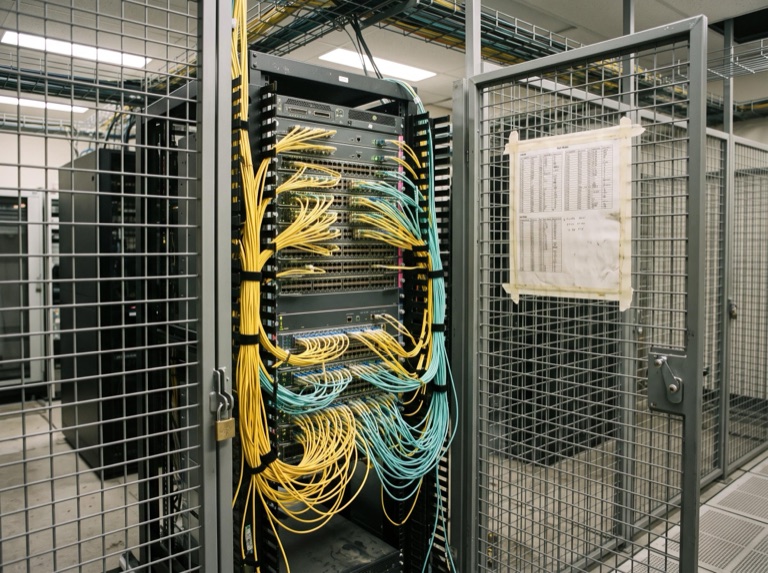
Most enterprise buyers don’t need a carrier hotel. Two independent transit carriers and the cloud on-ramp you use are available in many carrier-neutral facilities, usually for less. The premium pays off for a narrower set of workloads.
Use caseWhy the carrier hotel mattersCarrier hotel needed?If not, use
ISP building a first point of presenceSeveral Tier 1 carriers and an exchange from one locationOften yesA carrier-neutral facility with 15–20 carriers, for a regional ISP with no exchange plan
CDN node that peers at an exchangeSettlement-free peering takes traffic off paid transit at high volumesYes, if you peerA standard carrier-neutral facility, if your volume doesn’t justify an exchange port
Market data and trading connectivityMany market-data and financial networks meet in these buildings. The exchanges’ own matching engines sit in their data centers (NYSE in Mahwah, Nasdaq in Carteret, CME in Aurora).Often, for connectivityColocation at the exchange’s own data center, for latency-sensitive trading
Multi-cloud enterprise (AWS, Azure and Google Cloud)All three on-ramps by cross-connect from one building: 7 of the 12 buildings above are on all three listsPreferred, not requiredAny facility on the location lists of the clouds you use
Trans-Pacific or Latin American content deliveryCross-connects to subsea cable operators at One Wilshire, Seattle or MiamiYes, specific buildingsNo real equivalent
SaaS with a carrier redundancy requirementTwo independent Tier 1 transit carriers by cross-connectNoA carrier-neutral facility with two or more independent Tier 1 carriers on-net
Standard enterprise, 1–10 racksCarrier redundancy and cloud access, without the depth of a carrier hotelNoA carrier-neutral facility, often in a secondary market

The real cost of carrier hotel colocation: rack rate is the starting point

The gap between the rack quote and the monthly bill is wider in a carrier hotel than anywhere else in colocation, because most of what you pay for is the connections. Here is one rack with two transit carriers, a cloud on-ramp and an exchange port.

One rack in a carrier hotel, per month

  • The rack quoteFull 48U rack, 5 kW, 1 Gbps
    $1,600–1,800
  • Plus four cross-connectsTwo carriers, a cloud on-ramp, an exchange
    $2,400–4,200
  • The monthly billPlus two 1 Gbps transit commits and an exchange port
    $2,900–6,300

Ranges, not a quote: built from the line items below.

The line items

Line item$/monthWhere the number comes from
Rack: full 48U, 5 kW, with a 1 Gbps port$1,600–1,800Our November 2026 price sheet for New York, Chicago, Los Angeles and Virginia. Space in a named carrier hotel can price above the market range.
Two transit cross-connects$400–1,200$200–600 per circuit at premium hubs.
Cloud on-ramp cross-connect$200–600The cloud provider bills its own port on top.
Exchange cross-connect$200–600Needed only if you peer.
Two 1 Gbps transit commits$400–2,000About $200–1,000 per carrier (Hurricane Electric’s starting price; Equinix’s billing example).
Exchange port, 10G$104$1,250 a year at a community exchange such as FL-IX. Commercial exchanges quote on request.
Monthly bill$2,900–6,300About 1.8–3.5 times the rack quote.

One-time fees come on top: $500–1,000 per cross-connect on the published rate cards we’ve seen. The sheet’s rack price includes a 1 Gbps port from the facility; if your own carriers replace it, ask for the rack without bandwidth.

BGP sessions, your own ASN and PI address space in a carrier hotel

Carrier hotels are built for networks that run BGP: several transit carriers, an exchange and private peers are each one cross-connect away. If you plan to announce your own prefixes, confirm four things before you sign.

Your own router

Most carrier hotels let you bring your own router. Some managed colocation arrangements inside them don’t, so ask before you design around it.

What each carrier supports

A full routing table or a default route, BGP communities for traffic engineering, and how the carrier filters routes (RPKI route origin validation). A full table is about 1.09 million IPv4 and 267,000 IPv6 prefixes (CIDR Report, November 2026), so size your router for it.

Route servers at the exchange

A route server lets you peer with every member that uses it from one BGP session, instead of setting up each peer by hand.

Anycast across buildings

If you announce the same prefix from several carrier hotels, confirm each carrier accepts the announcement without filtering it.

Why “200+ networks on-net” doesn’t tell you what you’ll pay

Carrier hotels sell reach. The quote you compare usually leaves most of it out.

THE DIY WAY

You compare carrier hotels by network count

The count includes hundreds of regional ISPs, CDN caches and enterprises you’ll never connect to. It doesn’t say whether your two carriers are in this building or the one next door.

THE DIY WAY

You compare rack quotes

In a carrier hotel the rack can be the smaller part of the bill. Cross-connects, the exchange port and transit arrive as separate line items after you’ve picked the building.

THE DIY WAY

You find the building’s own meet-me room late

In a building with several operators, a cross-connect to a carrier in another suite can carry fees from your operator and from the building. Nobody quotes it until you order it.

How it works

You send the specs. We find the options. You decide.

STEP 1

Send your requirements.

Tell us what you're deploying, where you want it, and when you need it. Send the specs you have; we'll help with the rest.

HardwareRacks & kWLocationStart date

Estimates are fine. No perfect RFP needed.

STEP 3

Take the next step. On your terms.

Like the options? Contact the providers directly. Need more detail? Call or email us. We're here to help, not push you.

  • Go directly to the providers you like
  • Ask us questions whenever you need

Get 2–4 qualified options in 48 hours

Free for buyers

Your price is the same as going direct.

Comparable prices by email

Review the options before deciding on a call.

Trusted service since 2004

5,000+ clients helped.

By clicking here, I state that I have read and understood the Terms and Conditions

Case studies

See how we helped teams secure colocation with the right power, pricing, and providers.

Leonard Roszkowski

CEO Elemental Energy Solutions

Problem: Needed to source ASIC servers domestically. Skeptical about working with a new organization.

What we did: Connected them to buyers, sellers, and infrastructure partners across deployments. Removed procurement and logistics overhead entirely.

Result: Rapid organizational growth in a short period. Now uses QuoteColo as an ongoing procurement interface across hardware and infrastructure.

Noel Frutasio

CEO FSN Services and Communications

Problem: Regularly needed colocation space across multiple US states and time zones. Difficult to navigate the market without deep industry knowledge.

What we did: Defined requirements in one meeting, then delivered proposals with multiple carrier and data center options across every target market.

Result: Placed in 4 cities. Contracts signed quickly. Multi-state colocation needs resolved through a single point of contact.

Tim Mandell

DC Mining / MDI Access

Problem: Needed reliable options for crypto mining containers and equipment, along with industry partners who could support real deployment requirements.

What we did: Connected the project with relevant mining infrastructure and equipment resources through the QuoteColo network, simplifying the search and evaluation process.

Result: Gained a clearer path to suitable mining infrastructure, equipment and industry contacts without having to source every option independently.

5,000+

Clients helped since 2004

No Cost

to Buyers

500+

Worldwide providers

Quotes

in 48 h

Frequently asked questions: carrier hotel colocation

What is a carrier hotel and how is it different from standard colocation?

A carrier hotel is a colocation building where hundreds of networks have equipment in a shared meet-me room: PeeringDB lists 397 at 350 East Cermak in Chicago and 216 at 60 Hudson Street in New York (November 2026). Reaching any of them is an in-building cross-connect, installed in days, instead of a new circuit across the metro. The median US facility in PeeringDB lists 3 networks, and a good carrier-neutral facility usually has enough for two transit carriers and a cloud on-ramp.

What does a cross-connect cost in a carrier hotel?

A cross-connect at a premium carrier hotel or interconnection hub typically costs $200–600 a month per circuit; Equinix’s interconnection revenue in the Americas works out to about $365 per connection a month (Q3 2026). Install fees on published rate cards run $500–1,000. Some building meet-me rooms charge only the install: 165 Halsey Street lists $500 and no monthly fee. Four circuits at a premium hub add about $800–2,400 a month to the rack.

How many carriers do I actually need?

Two independent transit carriers cover redundancy and basic traffic engineering for most SaaS and enterprise deployments. Hosting companies and ISPs usually add one internet exchange port. Content networks with heavy traffic add direct peering with the largest content and access networks. Start from what your routing and redundancy plan requires, not from the number of networks the building advertises.

What’s the difference between on-net and off-net carriers at a facility?

An on-net carrier has equipment in the building’s meet-me room, so you reach it with an in-building cross-connect, usually installed in 1–5 business days. An off-net carrier has to bring in a new circuit from one of its other sites: Lumen’s own estimate for an off-net internet or Ethernet circuit is 45–75 business days, longer if fiber has to be built. Check which of your carriers are on-net, not how many networks the building lists.

Do I need to use BGP to benefit from a carrier hotel?

No. Many tenants take a single transit connection, use the carrier’s IP addresses and let the carrier handle routing. Cloud on-ramp customers often run BGP only with the cloud provider. Your own ASN and announced address space add routing control, multihoming across carriers and traffic engineering, which is what ISPs, hosting companies and high-availability platforms come to carrier hotels for.

What is blended transit?

Blended transit means buying IP transit from two or more carriers at once and letting your router choose the best path to each destination with BGP. If one carrier has an outage or a congested route, traffic moves to the other. It needs your own ASN, address space you can announce, a BGP-capable router and one cross-connect per carrier, which is why carrier hotels, with many carriers in one building, suit it.

What is an internet exchange and do I need one?

An internet exchange is a shared switch where networks swap traffic directly instead of paying transit for it. A 10G port costs $1,250 a year at community exchanges such as FL-IX and $1,500 one-time at Seattle IX; commercial exchanges quote on request. Add a $200–600 cross-connect. At about $0.18 per Mbps for transit, peering pays on price once a few gigabits go to exchange members. You still need transit for everything else.

Do I need a carrier hotel for AWS Direct Connect or Azure ExpressRoute?

No. AWS Direct Connect, Azure ExpressRoute and Google Cloud Interconnect are available in many carrier-neutral facilities as well as carrier hotels, and each cloud publishes its own location list. What matters is whether the specific building you’re considering is on that list. If it isn’t, you pay for a link to a building that is.

What does carrier hotel colocation really cost per month?

Plan on about 1.8–3.5 times the rack quote. A full 48U rack with 5 kW runs $1,600–1,800 a month in New York, Chicago, Los Angeles or Virginia on our November 2026 sheet. Four cross-connects at a premium hub add $800–2,400, two 1 Gbps transit commits $400–2,000 and a community exchange port about $104. That comes to about $2,900–6,300 a month, plus $500–1,000 to install each cross-connect.

Does QuoteColo charge for carrier hotel matching?

No. You don’t pay us. Providers share their existing standard sales commission with QuoteColo, so there’s no added fee or markup on your provider quote. Send your carriers, cloud on-ramps, exchange needs, racks and kW once, and you get matched options by email within 48 hours once the requirements are clear, with cross-connect pricing included.