
Vacancy is at record lows.
Across CBRE’s eight primary North American markets, 1.4% of capacity was vacant in the first half of 2026, and 0.2% in Northern Virginia. Listed availability often differs from what’s free at your kW and date.
Half racks, full cabinets and small cages, 1–20 racks
Retail colocation is renting a half rack, a full cabinet or a small cage in a shared data center, priced per cabinet per month. On our November 2026 price sheet a full 48U rack with 5 kW and a 1 Gbps port costs $1,500–1,800 a month across 26 US and Canadian markets, and a half rack with 2 kW $750–1,500. Cross-connects, remote hands and setup fees come on top, so compare the monthly bill, not the rack rate.
Updated November 2026 · Bob Spiegel, Founder, QuoteColo

“Tell me what you’re deploying; I’ll come back with real options from a network built over 20 years.”
— Bob Spiegel, Founder, QuoteColo
In this guide
From our desk, November 2026
From Bob’s November 2026 City Price Sheet and his deals and quotes (customers and providers withheld). Prices are per month.
Retail colocation means renting space, power and network connectivity inside a shared data center. You own and run your servers; the facility provides the building, power, cooling, physical security and network up to your cabinet. Most companies deploying 1–20 racks are retail buyers.
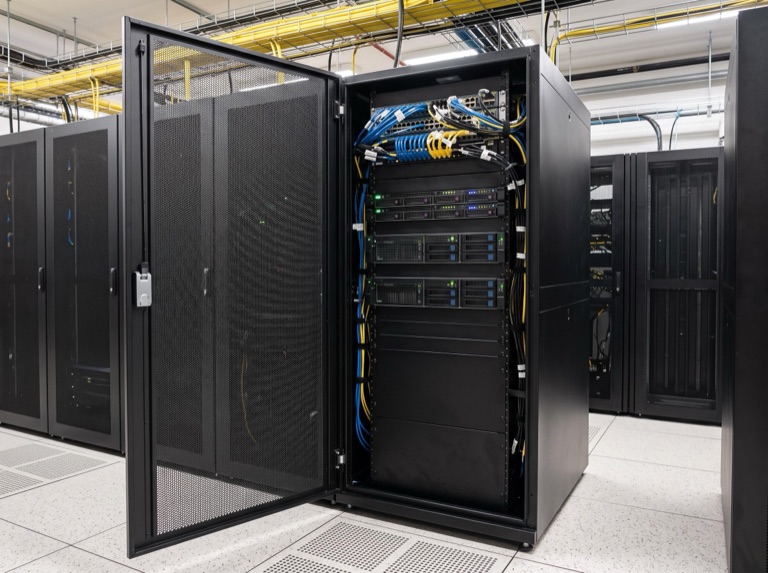
Bob’s City Price Sheet, November 2026: the price per cabinet per month, with the power and bandwidth in each footprint, across 26 US and Canadian markets.
Lowest low to highest high across the markets on the sheet. The markets fall into four price groups, below.
Want these numbers for your own deployment? and we’ll reply with the providers that fit, with their prices.
The rack rate is what providers lead with. The bill adds a few predictable lines, and two real deals on our desk show what a complete monthly price looks like.
Five kinds of buyers make up most retail requests.
For spiky and experimental workloads the cloud usually wins. For steady compute that runs around the clock, owned hardware in a rack often costs less over two to three years. Do the comparison with your own bill.
Brand, Tier and uptime SLA matter, but they’re rarely what trips up a deployment. Check these before you sign.
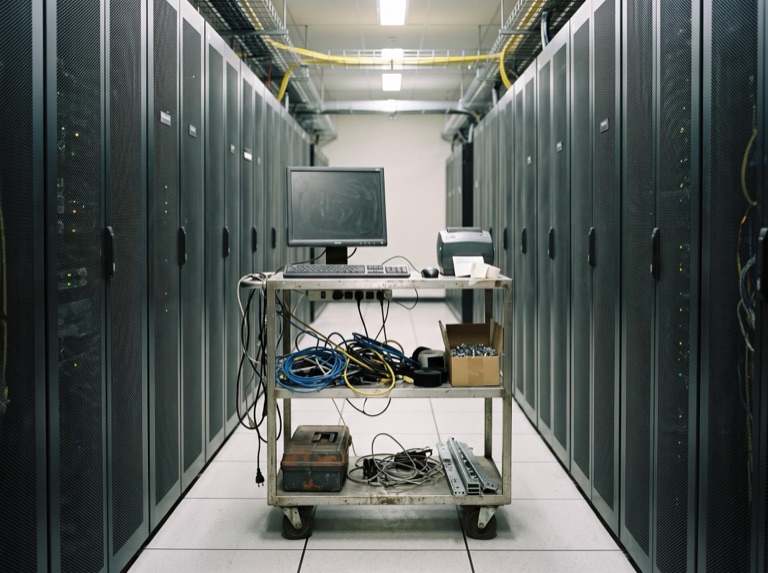
Retail colocation is one of five common ways to run infrastructure.
What the market looks like going into 2027.
Across CBRE’s eight primary North American markets, 1.4% of capacity was vacant in the first half of 2026, and 0.2% in Northern Virginia. Listed availability often differs from what’s free at your kW and date.
More than 80% of primary-market capacity under construction was preleased (CBRE, H1 2026). Waiting for a new facility is not a plan for next quarter.
Large operators focus on bigger commitments in tight markets. Mid-tier and regional providers take most 1–20 rack deployments.
83% of IT leaders in Broadcom’s 2026 survey were considering moving workloads out of public cloud; half had already moved some.
Deals and quotes from our own desk, with what each price includes. Customers and providers are withheld.
$899.30 a month on a 12-month term with no setup fee: A/B 120V 20A power at 16A maximum, 100 Mbps, a /29 of IPv4 and five hours of remote hands. Closed September 2026.
$2,700 a month for space and power on A+B feeds, 12 months, $270 per kW. With a 1 Gbps commit and PDUs, $3,096. Signed June 2026; the same client added two 5 kW racks in July.
$8,170 a month for space and power, $240 per kW, on A/B 60A 208V three-phase circuits, 24 months. Signed September 2026; a third cabinet followed in October.
Most providers don’t publish prices, and the ones you get back don’t line up.
The large operators don’t publish rack rates, and ranges on smaller providers’ sites are rarely current or specific to your power.
One quote includes bandwidth and A+B power; the next bills power, cross-connects and remote hands separately. The cheaper one often isn’t.
Mid-tier and regional operators with room for a few racks rarely rank in search, and they’re often the ones that fit.
Send your requirements once.
We match them against prices and specs we already hold from 500+ providers.
You get the providers that fit, with prices, and call the ones you pick.
You never pay us. Providers cover it.
You send the specs. We find the options. You decide.

Tell us what you're deploying, where you want it, and when you need it. Send the specs you have; we'll help with the rest.
Estimates are fine. No perfect RFP needed.
We filter our network of 500+ providers down to a few that fit, then email you their names and estimated all-in pricing for your requirements.
 Provider names & matched optionsEstimated total, with inclusions & extrasAvailability & key terms

Like the options? Contact the providers directly. Need more detail? Call or email us. We're here to help, not push you.
 Go directly to the providers you like
 Ask us questions whenever you need
Your price is the same as going direct.
Review the options before deciding on a call.
5,000+ clients helped.

See how we helped teams secure colocation with the right power, pricing, and providers.
Prices, checklists and market notes from the same desk.
Clients helped since 2004
to Buyers
Worldwide providers
in 48 h
Retail colocation is renting a half rack, a full cabinet or a small cage in a shared data center, priced per cabinet per month. Wholesale colocation is leasing a dedicated suite or floor, from about 100 kW to several megawatts, priced per kW on longer terms. Most companies deploying 1–20 racks are retail buyers; above that, see our wholesale guide.
On our November 2026 price sheet, a full 48U rack with 5 kW and a 1 Gbps port costs $1,500–1,800 a month across 26 markets, and a half rack with 2 kW $750–1,500. A 15 kW rack is $4,500–6,750. Cross-connects ($200–600 a month each at interconnection hubs), remote hands and setup fees come on top.
A full rack is a 42U–48U cabinet with its own circuits; a half rack is about 24U, usually sharing a cabinet with a lockable divider. On our November 2026 sheet a half rack with 2 kW costs $750–1,500 a month and a full rack with 5 kW $1,500–1,800. Half racks are rarely offered at high density.
Two independent power feeds to your cabinet, each from its own UPS and distribution path, so one can fail or be serviced while the other carries the load. It needs servers with two power supplies, and each feed must be able to carry the whole rack. Confirm it for your cabinet, not the building. More in our A+B power guide.
Usually, yes. Most retail providers offer 12-month terms, typically at a higher monthly price than 36 months; some require 24 months for high-density cabinets. Both real bills on this page were 12-month terms. Tell us if term flexibility matters and we filter for it.
Rarely. The large operators don’t publish rack rates, and ranges on smaller providers’ sites are seldom current or specific to your power. That’s why we keep a price sheet: a 5 kW full rack is $1,500–1,800 a month across our 26 markets in November 2026, and you get current prices from matched providers by email within 48 hours once the requirements are clear.
Some regional providers do, on shared cabinets. The smallest footprint we price and match is a half rack (24U, 2 kW), because single-server deployments rarely get better terms than a half rack once remote hands and setup are counted. If one server is all you need, tell us and we’ll say plainly whether a half rack makes sense.
Committed billing means you reserve a power amount, say 5 kW, and pay for it every month whether you draw it or not. Metered billing charges for the energy you actually use, which suits workloads that idle much of the time, such as inference. Committed is the norm; ask whether metered is available before comparing quotes.
Often two to six weeks from a signed contract in a facility with power available. High-density cabinets that need new circuits or liquid cooling take longer, and in tight markets such as Northern Virginia, at 0.2% vacancy (CBRE, H1 2026), getting power allocated can be the longest step.
No. QuoteColo is free for buyers and carries no obligation. Providers pay the referral fee, and the buyer’s price is not marked up. You send the requirements once, receive qualified introductions and pricing, and choose whether any option deserves a direct conversation.


