
Pick a hub by price alone
Tokyo and Hong Kong cost less per kW than Singapore, but Singapore to Tokyo is about 72 ms. Pick the hub for your users first, then compare prices.
Colocation in Asia usually means Singapore, Tokyo or Hong Kong: three hubs with very different prices, space and rules.
Send us your specs and we’ll email matched options in Singapore, Tokyo or Hong Kong with this month’s prices and terms, plus Johor or Sydney when they fit better.
Free for you: providers pay us. Questions first? Call (888) 400-5732.
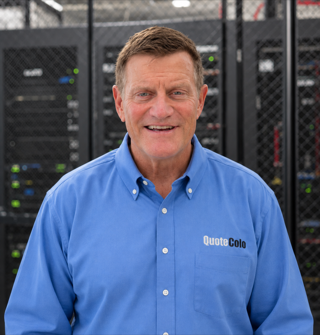
“Singapore is the most expensive hub in Asia and the hardest to get into. Tokyo and Hong Kong cost less per kW, and I’ll price all three against where your users are.”
— Bob Spiegel, Founder, QuoteColo
Clients helped since 2004
Providers, including Singapore, Tokyo and Hong Kong operators
For buyers: providers pay us
Prices and terms in writing, no sales calls
Singapore is the most expensive colocation market in Asia: CBRE put average asking rents at about $403 per kW a month in Q1 2026, in a $330–475 range. Hong Kong averaged $295 and Tokyo $280, about 27–31% less per kW. Single racks and small deployments price higher per kW.
Benchmarks: Coloprice Colocation Price Index, Q3 2026 (updated October 2026), from CBRE’s Global Data Center Trends 2026: average asking rents in Q1 2026, USD per kW per month of committed IT load, excluding metered power. Licensed CC BY 4.0. Benchmarks, not quotes.
These are public market benchmarks, not quotes: call us at (888) 400-5732 to confirm current prices and availability.
Match the facility to the exact hardware and usable power you need. GPU capacity in Asia comes through our network and is priced on request.
| Deployment | Usable power | What we check | Price USD / month |
|---|---|---|---|
| High-density rack | 15–20 kW per rack, enough for one B300-class server | Cooling and A/B power at your density | On request: call to confirm |
| Liquid-cooled or 20 kW+ per server | Your total kW and kW per rack | Installed liquid cooling, not “liquid-ready” | Case by case, higher setup fees |
Cooling follows your hardware, not the GPU label. We confirm the rack heat load, airflow or liquid requirements, A/B capacity and the infrastructure installed today; “liquid-ready” alone isn’t enough. Liquid cooling and servers over 20 kW are priced case by case, often with higher setup fees.
Singapore, Japan and Hong Kong: capacity through our network, priced on request; it isn’t on our listed sheet yet. Bandwidth, cross-connects and remote hands are quoted separately.
Enter your servers and the kW each one draws, e.g. 8 × B300 at 14 kW. The kW Capacity Matcher shows the GPU and high-density capacity we have on file, in the US and Europe, with the listed $/kW, the install window and a monthly estimate.
One requirements email in, a tighter shortlist out, and a straight answer on whether Singapore, Tokyo, Hong Kong or Johor is the better fit.
Tokyo and Hong Kong cost less per kW than Singapore, but Singapore to Tokyo is about 72 ms. Pick the hub for your users first, then compare prices.
Each hub has dozens of facilities. Smaller operators often have the space a few racks need, especially in Singapore, where new capacity comes in government rounds.
They tell you which facilities exist in Singapore, Tokyo or Hong Kong. They can’t tell you who has power at your size this month, or what it costs.
Send your requirements once.
We match them against providers in our network of 500+, including operators that don’t publish prices.
You get the Asia options that fit, with current prices, and call the ones you pick.
You never pay us. Providers cover it.
You send the specs. We find the options. You decide.

Tell us what you're deploying, where you want it, and when you need it. Send the specs you have; we'll help with the rest.
Estimates are fine. No perfect RFP needed.
We filter our network of 500+ providers down to a few that fit, then email you their names and estimated all-in pricing for your requirements.
 Provider names & matched optionsEstimated total, with inclusions & extrasAvailability & key terms

Like the options? Contact the providers directly. Need more detail? Call or email us. We're here to help, not push you.
 Go directly to the providers you like
 Ask us questions whenever you need






Line up how each quote in Asia bills space, power and electricity before you compare two providers, or a quote with a US all-in rack price.
| Cost component | How Asia providers usually bill it | Benchmark |
|---|---|---|
| Space and committed power | Larger deals: per kW of committed IT load. Retail racks: per cabinet with a set kW | $280–403 per kW (average asking rents, Tokyo to Singapore) |
| Electricity | Included up to the rack’s kW, or metered on top per kWh; ask which model each quote uses | On request; it differs by market and contract |
| Cross-connects and exchanges | Per connection a month plus a one-time fee; SGIX, BBIX, JPIX, JPNAP and HKIX ports are priced separately | On request |
| Remote hands | Hourly, often with a monthly bundle of hours | On request |
| Sales tax | Singapore GST is 9%, and colocation sold to an overseas customer can be zero-rated; Japan’s consumption tax is 10%. Check your contract with a tax adviser | Singapore 9% or 0%; Japan 10% |
| Currency and term | Quoted in local currency or US dollars, depending on the provider | Ask for both currencies |
Your users are across Asia, you need a regional hub for finance, cloud or content, or your data has to stay in Singapore, Japan or Hong Kong.
Singapore full or too expensive? Price Johor across the border, or Hong Kong, about 36 ms away with the most free space of the three hubs.
We compare Singapore, Tokyo and Hong Kong for your users and explain the trade-offs in price, latency, power availability and data rules before you choose a provider.
Equinix SG1, SG2, SG3 and SG5 and Digital Realty SIN10 on the western side. The latest government round put new capacity on Jurong Island.
Equinix SG4 and STT GDC in Tai Seng and Defu, and Digital Realty SIN11 and SIN12 in Loyang, near the Changi North cable landing station. SIN11 hosts a lab with liquid-cooled racks of 150 kW and more.
Tokyo’s interconnection and finance sites: Equinix TY4 in Otemachi, TY2 and TY8 in Shinagawa, TY11 in Ariake and TY15 in Minato. Start here for exchanges and low latency to Japanese users.
The large-scale campuses: Equinix TY12x, MC Digital Realty NRT10 and NRT14, which supports up to 150 kW per rack, plus AirTrunk and NTT DATA. Inzai grew around nearby power plants and strong transmission lines.
Tsuen Wan and Kwai Chung for interconnection (Equinix HK1, HK2 and HK6, Digital Realty HKG11), Tseung Kwan O for purpose-built high-tier buildings on land the government set aside, and iAdvantage MEGA-i in Chai Wan with 200+ carriers.
Johor, across the border from Singapore, grew live capacity 53% in 2025 (CBRE); Equinix JH1 there is about 15 km from Singapore. Sydney benchmarks lower than all three hubs and is about 95 ms from Singapore.
CBRE counted about 821 MW of live capacity in Singapore, 1,086 MW in Greater Tokyo and 687 MW in Hong Kong in Q1 2026. In each hub, interconnection sites sit close to the center and the larger campuses further out.
| Facility / service location | Operator | Location | Address | Focus |
|---|---|---|---|---|
| Equinix SG1 | Equinix | Ayer Rajah | 20 Ayer Rajah Crescent, 139964 | Equinix’s Asia-Pacific network operations centre; exchange access |
| Equinix SG4 | Equinix | Tai Seng | 7 Tai Seng Drive, 535218 | Network, cloud and finance ecosystems on the east side |
| Digital Realty SIN10 | Digital Realty | Jurong East | 29A International Business Park, 609934 | West-side campus |
| Digital Realty SIN11 (Digital Loyang 1) | Digital Realty | Loyang | 3 Loyang Way, 508719 | Innovation lab with liquid-cooled racks of 150 kW and more |
| Digital Realty SIN12 (Digital Loyang 2) | Digital Realty | Loyang | 11 Loyang Close, 506756 | Near the Changi North cable landing station; SGIX |
| STT Singapore 1 | STT GDC | Defu | 21 Defu Avenue 1, 539539 | Up to 13 MW of IT load |
| STT Singapore 5 | STT GDC | Tai Seng | 35 Tai Seng Street, 534103 | More than 13.8 MW of IT load; metro links to subsea cables |
| Facility / service location | Operator | Location | Address | Focus |
|---|---|---|---|---|
| Equinix TY4 | Equinix | Otemachi, Chiyoda | Otemachi Financial City North Tower, 1-9-5 Otemachi | Exchanges, the stock exchange and financial-services partners |
| Equinix TY11 | Equinix | Ariake, Koto | 1-2-41 Ariake | Exchange and finance access; 11,553 m² |
| Equinix TY15 | Equinix | Konan, Minato | 3-6-28 Konan | Direct fibre to TY2; 8,280 m² |
| Equinix TY12x | Equinix (xScale) | Inzai, Chiba | 2-101-8 Izumino | Hyperscale, up to 54 MW of IT load |
| Digital Realty NRT10 (Digital Narita 2) | MC Digital Realty | Inzai, Chiba | 2-9-3 Otsuka | Large-capacity campus building |
| Digital Realty NRT14 | MC Digital Realty | Inzai, Chiba | 2-4-3 Otsuka | HPC and AI, up to 150 kW per rack; opened April 2026 |
| Facility / service location | Operator | Location | Address | Focus |
|---|---|---|---|---|
| Equinix HK1 | Equinix | Tsuen Wan | Goodman Global Gateway, 168 Yeung Uk Road | Fibre-linked campus; liquid-cooling pilot |
| Equinix HK6 | Equinix | Tsuen Wan | 18 Sha Tsui Road | Opened June 2026 with direct-to-chip liquid cooling |
| Digital Realty HKG10 | Digital Realty | Tseung Kwan O | 33 Chun Choi Street | High-tier site in the Tseung Kwan O cluster |
| Digital Realty HKG11 | Digital Realty | Kwai Chung | 11 Kin Chuen | Kwai Chung cluster |
| iAdvantage MEGA-i | iAdvantage (SUNeVision) | Chai Wan | 399 Chai Wan Road | Interconnection hub with 200+ carriers and ISPs |
| iAdvantage MEGA Plus | iAdvantage (SUNeVision) | Tseung Kwan O | 299 Wan Po Road | On land the government set aside for high-tier data centers |
| iAdvantage MEGA Two | iAdvantage (SUNeVision) | Fo Tan, Sha Tin | 8–12 Wong Chuk Yeung Street | Gateway to mainland China; carriers, banks and cloud providers |
A representative list of facilities, not a live inventory of available space. Addresses from the operators’ own sites (November 2026). We also work with operators in Singapore, Japan, Hong Kong and Johor that don’t show up in search, and we confirm the service scope, capacity and terms for your requirement.
Different workloads. The same need for power, interconnection and clear commercial terms.
Singapore suits Southeast Asia and regional headquarters, Tokyo suits Japanese users and is the closest hub to the US West Coast, and Hong Kong suits finance and the route into mainland China. Match your workload to the power, cooling and data rules you need, then compare the full cost.
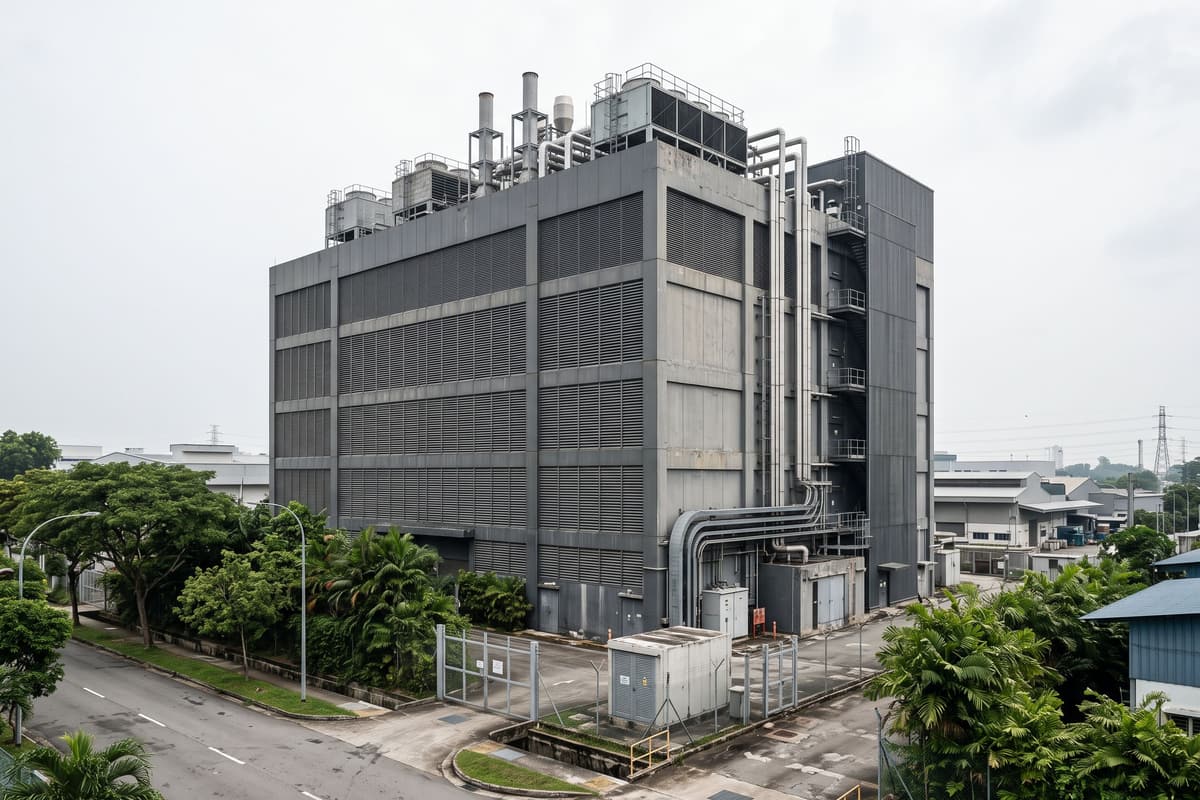
A regional hub close to your users, with data kept where your customers and contracts need it.
Sites close to the exchanges and financial ecosystems in Singapore, Tokyo and Hong Kong.
Peering at Equinix IX Singapore, SGIX, BBIX, JPIX, JPNAP and HKIX.
Dense racks where usable kW, cooling and the delivery date are confirmed in writing.
Production workloads in Asia with redundancy, remote hands and room to grow.
A second Asian site: Singapore to Hong Kong is about 36 ms, Tokyo to Hong Kong about 49 ms.
Each hub has its own data and tax rules, and Singapore also limits how much new capacity gets built.
Singapore paused new data centers in 2019, lifted the pause in 2022 and now releases capacity in rounds. In August 2026 it gave 50 MW each to Digital Realty, Equinix, Keppel and STT GDC, all on Jurong Island, with liquid cooling, a PUE target of 1.25 and at least 50% green energy.
In Singapore, personal data can leave the country only with protection comparable to the PDPA, through a contract or a certification. In Japan, sending personal data abroad generally needs the person’s consent unless the country or the recipient qualifies under the APPI.
Hong Kong has set aside land for high-tier data centers in Tseung Kwan O and awarded a new site at Sandy Ridge in March 2026. Japan has subsidized data centers outside the Tokyo area, such as SoftBank’s AI campus in Hokkaido.
Singapore GST is 9%, and colocation sold to an overseas customer can be zero-rated. Japan’s consumption tax is 10%; how it applies to servers housed in Japan for a foreign buyer is a question for a tax adviser.
Sources: EDB on the second capacity round (August 2026); PDPC guidelines; NTA on consumption tax; Hong Kong government on Sandy Ridge. A summary, not legal or tax advice.

“Prices in Asia move month to month, and each hub is a different market. Tell me where your users are and what you’re deploying, and I’ll come back with what’s available now and what it costs.”
Bob Spiegel, Founder, QuoteColo