
Compare Australian-dollar quotes with US rack prices
Australian quotes often come in Australian dollars and may bill electricity separately, so they don’t compare with a US all-in rack price until both are on the same basis.
Colocation in Australia means Sydney or Melbourne, data kept onshore, and new space that is mostly leased before it is built.
Send us your specs and we’ll email matched Sydney and Melbourne options with this month’s prices and terms, plus Singapore when your users are spread across Asia.
Free for you: providers pay us. Questions first? Call (888) 400-5732.
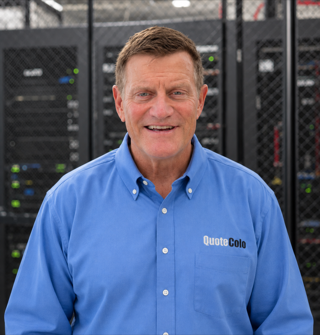
“Sydney costs less per kW than Singapore or Tokyo. The hard part is finding space that isn’t already pre-leased, so start early.”
— Bob Spiegel, Founder, QuoteColo
Clients helped since 2004
Providers, including Sydney and Melbourne operators
For buyers: providers pay us
Prices and terms in writing, no sales calls
Wholesale colocation in Sydney benchmarks at about $188 per kW a month, according to CBRE, well below Tokyo ($280) and Singapore ($403). Space is tight: CBRE put Sydney vacancy at 4.5% in Q1 2026. Single racks and small deployments price higher per kW.
Benchmarks: Coloprice Colocation Price Index, Q3 2026 (updated October 2026), from CBRE’s Global Data Center Trends 2026: average asking rents in Q1 2026, USD per kW per month of committed IT load, excluding metered power. Licensed CC BY 4.0. Benchmarks, not quotes.
These are public market benchmarks, not quotes: call us at (888) 400-5732 to confirm current prices and availability.
Match the facility to the exact hardware and usable power you need. GPU capacity in Australia comes through our network and is priced on request.
| Deployment | Usable power | What we check | Price USD / month |
|---|---|---|---|
| High-density rack | 15–20 kW per rack, enough for one B300-class server | Cooling and A/B power at your density | On request: call to confirm |
| Liquid-cooled or 20 kW+ per server | Your total kW and kW per rack | Installed liquid cooling, not “liquid-ready” | Case by case, higher setup fees |
Cooling follows your hardware, not the GPU label. We confirm the rack heat load, airflow or liquid requirements, A/B capacity and the infrastructure installed today; “liquid-ready” alone isn’t enough. Liquid cooling and servers over 20 kW are priced case by case, often with higher setup fees.
Australia: capacity through our network, priced on request; it isn’t on our listed sheet yet. Bandwidth, cross-connects and remote hands are quoted separately.
Enter your servers and the kW each one draws, e.g. 8 × B300 at 14 kW. The kW Capacity Matcher shows the GPU and high-density capacity we have on file, in the US and Europe, with the listed $/kW, the install window and a monthly estimate.
One requirements email in, a tighter shortlist out, and a straight answer on whether Sydney, Melbourne or Singapore is the better fit.
Australian quotes often come in Australian dollars and may bill electricity separately, so they don’t compare with a US all-in rack price until both are on the same basis.
New Sydney and Melbourne campuses are mostly pre-leased to large tenants. Smaller and older sites often have the space a few racks need.
They tell you which Sydney and Melbourne facilities exist. They can’t tell you who has power at your size this month, or what it costs.
Send your requirements once.
We match them against providers in our network of 500+, including operators that don’t publish prices.
You get the Australia options that fit, with current prices, and call the ones you pick.
You never pay us. Providers cover it.
You send the specs. We find the options. You decide.

Tell us what you're deploying, where you want it, and when you need it. Send the specs you have; we'll help with the rest.
Estimates are fine. No perfect RFP needed.
We filter our network of 500+ providers down to a few that fit, then email you their names and estimated all-in pricing for your requirements.
 Provider names & matched optionsEstimated total, with inclusions & extrasAvailability & key terms

Like the options? Contact the providers directly. Need more detail? Call or email us. We're here to help, not push you.
 Go directly to the providers you like
 Ask us questions whenever you need






Line up how each Australian quote bills space, power and electricity before you compare two providers, or an Australian quote with a US all-in rack price.
| Cost component | How Australia providers usually bill it | Benchmark |
|---|---|---|
| Space and committed power | Wholesale: per kW of committed IT load. Retail racks: per cabinet, usually with a set kW | About $188 per kW in Sydney (wholesale benchmark) |
| Electricity | Included up to the rack’s kW, or metered on top per kWh; ask which model each quote uses | Wholesale only: A$74 per MWh in NSW, A$56 in Victoria (AEMO, Q3 2026) |
| Cross-connects and internet exchanges | Per connection a month plus a one-time fee; MegaIX, Equinix Internet Exchange and IX Australia ports are priced separately | On request |
| Remote hands | Hourly, often with a monthly bundle of hours | On request |
| GST | 10% on supplies connected with Australia. Some services to overseas businesses are GST-free, but colocation can be treated differently | 10%, or GST-free if your adviser confirms it |
| Currency and term | Often quoted in Australian dollars; some providers bill US dollars. Compare both on the same basis | Ask for both currencies |
Your users are in Australia or New Zealand, your data has to stay onshore, or you serve government or critical-infrastructure clients.
If your users are spread across Southeast Asia, price Singapore too. It costs more per kW, but it is about 95 ms closer to most of the region than Sydney.
We compare Sydney, Melbourne and a realistic Plan B and explain the trade-offs in price, latency, power availability and data rules before you choose a provider.
Sydney’s interconnection hub near the CBD: Equinix SY1 on Gardeners Road and SY3–SY5 on Bourke Road. Start here when you need many networks in one building.
Macquarie Data Centres IC1 in the CBD, and enterprise and government sites in Macquarie Park, Artarmon and Lane Cove West: NEXTDC S1–S3, Macquarie’s campus and AirTrunk SYD2. NEXTDC S6 in Artarmon is built for AI.
The large new campuses: CDC Eastern Creek, Digital Realty SYD10 and SYD11, Equinix SY9x and NEXTDC’s planned S7 AI campus with OpenAI. Transgrid says spare transmission capacity in the Sydney basin is largely used up, so new power for big sites comes in stages.
Port Melbourne is the inner hub (NEXTDC M1, Equinix ME1 and ME2), with larger campuses at Tullamarine, West Footscray and Deer Park. CBRE says planning is simpler in Melbourne than in Sydney, and live capacity there grew 37% in 2025.
Smaller markets. Canberra is the centre for federal government hosting; Brisbane and Perth serve local users and recovery sites.
Melbourne is about 15 ms from Sydney, Auckland 28 ms, Singapore 95 ms and Tokyo 104 ms (Azure round-trip medians, July 2026). Melbourne is the usual second site in Australia; Singapore when users are across Southeast Asia.
Sydney had about 950 MW of live capacity and Melbourne about 580 MW in Q1 2026 (CBRE). New South Wales uses about two thirds of the electricity data centers draw from the east-coast grid, and Victoria most of the rest (AEMO).
| Facility / service location | Operator | Location | Address | Focus |
|---|---|---|---|---|
| Equinix SY1 | Equinix | Mascot | Unit B, 639 Gardeners Road, NSW 2020 | Interconnection near the CBD, with access to the Southern Cross cable |
| Equinix SY3 | Equinix | Alexandria | 47 Bourke Road, NSW 2015 | Interconnection campus; high-density cooling offered; Certified Strategic (enclave) |
| Equinix SY4 | Equinix | Alexandria | 200 Bourke Road, NSW 2015 | Interconnection; Certified Strategic (enclave) |
| Equinix SY5 | Equinix | Alexandria | Unit B, 200 Bourke Road, NSW 2015 | Equinix’s largest in Australia, 9,220 cabinets at full build; fibre to SY1–SY4 |
| Facility / service location | Operator | Location | Address | Focus |
|---|---|---|---|---|
| Macquarie IC1 | Macquarie Data Centres | Sydney CBD | Level 16, 477 Pitt Street, NSW 2000 | 2 MW in the CBD; Certified Strategic (enclave) |
| NEXTDC S1 | NEXTDC | Macquarie Park | 4 Eden Park Drive, NSW 2113 | 16 MW, Tier III, 2,800 racks |
| NEXTDC S2 | NEXTDC | Macquarie Park | 6–8 Giffnock Avenue, NSW 2113 | 30 MW, 4,543 racks |
| NEXTDC S3 | NEXTDC | Artarmon | 2 Broadcast Way, NSW 2064 | 80 MW, Tier IV, 10,800 racks, under 10 km from the CBD |
| Macquarie IC2 and IC3 East | Macquarie Data Centres | Macquarie Park | 17–23 Talavera Road, NSW 2113 | Government and enterprise colocation; IC3 Super West, for AI, due on the same campus in 2026 |
| AirTrunk SYD2 | AirTrunk | Lane Cove West | 1 Sirius Road | Hyperscale cloud campus, 180 MW+ at full build; Certified Strategic |
| Facility / service location | Operator | Location | Address | Focus |
|---|---|---|---|---|
| Equinix SY9x | Equinix (xScale) | Rosehill | 8A Grand Avenue, NSW 2142 | Hyperscale; 14 MW+ now, 28 MW+ at full build |
| Digital Realty SYD10 | Digital Realty | Erskine Park | 1–12 Templar Road, NSW 2759 | 8,000 m²; Certified Strategic (enclave) |
| Facility / service location | Operator | Location | Address | Focus |
|---|---|---|---|---|
| NEXTDC M1 | NEXTDC | Port Melbourne | 826 Lorimer Street, VIC 3207 | 16 MW, Tier III, 3,000 racks |
| Equinix ME1 and ME2 | Equinix | Port Melbourne | 578 Lorimer Street, VIC 3207 | Interconnection; ME1 Certified Strategic (enclave) |
| NEXTDC M2 | NEXTDC | Tullamarine | 75 Sharps Road, VIC 3043 | 120 MW+, Tier IV |
| NEXTDC M3 | NEXTDC | West Footscray | 25 Indwe Street, VIC 3012 | 225 MW, Tier IV, 23,000 racks, 10 km from the CBD |
| Digital Realty MEL11 | Digital Realty | Deer Park | 72 Radnor Drive, VIC 3023 | Certified Strategic (enclave) |
A representative list of facilities, not a live inventory of available space. Addresses from the operators’ own sites (November 2026); “Certified Strategic” is the status in the government’s Hosting Certification Framework. We also work with Australian operators that don’t show up in search, and we confirm the service scope, capacity and terms for your requirement.
Different workloads. The same need for power, interconnection and clear commercial terms.
Sydney is the larger market and the interconnection hub; Melbourne is the usual second site. They suit companies serving Australian and New Zealand users, government and regulated workloads that must stay onshore, and AI teams that need dense racks in the region. Match your workload to the power, cooling and data rules you need, then compare the full cost.
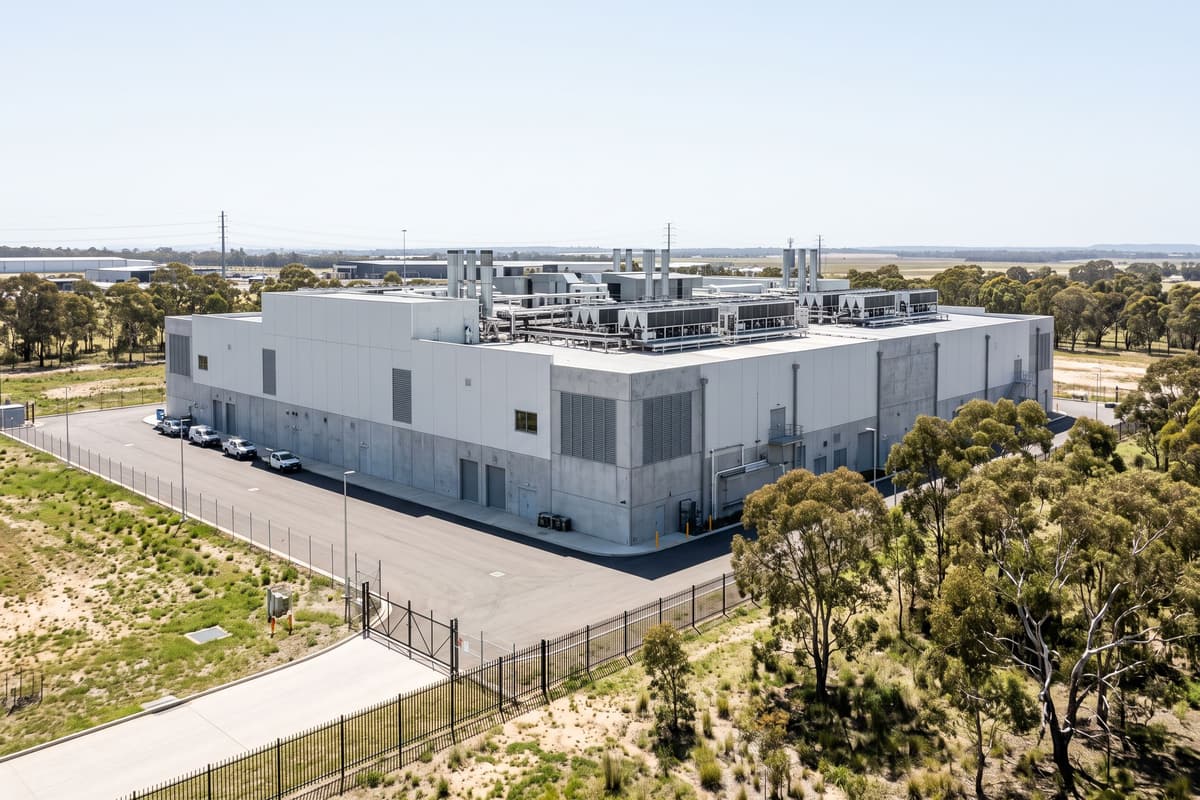
Hosting in Australia for customers and contracts that ask where their data lives.
Certified Strategic sites, and providers that know their obligations under the SOCI Act.
Peering at MegaIX, Equinix Internet Exchange and IX Australia in Sydney, each with roughly 180–230 networks.
Dense racks in Australia where usable kW, cooling and the delivery date are confirmed in writing.
Production workloads with redundancy, remote hands and room to grow.
A Melbourne recovery site for Sydney production, about 15 ms away, or the other way round.
Australian rules decide part of what you pay for, and what you can ask a provider to prove.
If you send personal information about Australians overseas, APP 8 makes you take reasonable steps to protect it and keeps you accountable for the overseas recipient. Storing it with a provider you keep in effective control of can count as a “use” rather than a “disclosure”, but hosting in Australia keeps the question simple.
A provider that stores or processes business-critical data for government bodies or critical-infrastructure owners falls under the Security of Critical Infrastructure Act: registration, cyber incident reporting and a written risk management program. Ask for the provider’s position in writing.
Many Sydney and Melbourne sites hold “Certified Strategic” status, the highest level for government data. Registration of new providers has been paused since 3 November 2025 while the framework is reformed; existing certifications still stand.
GST is 10%. Some services to overseas businesses are GST-free, but colocation can be treated differently, so check the GST treatment in your contract with the provider and with your tax adviser.
Sources: OAIC guidelines on APP 8; CISC on the SOCI Act; Hosting Certification Framework; ATO on GST. A summary, not legal or tax advice.

“Prices in Australia move month to month. Tell me what you’re deploying and when, and I’ll come back with who has room now and what it costs.”
Bob Spiegel, Founder, QuoteColo